Christian Horner’s Drive: Red Bull, Verstappen and the Memoir Fallout
20 years at Red Bull Racing, 124 wins, 14 titles, one sacking, and now 320 pages of score-settling. Here is what the memoir actually says.
Listen to this article 17 min, narrated
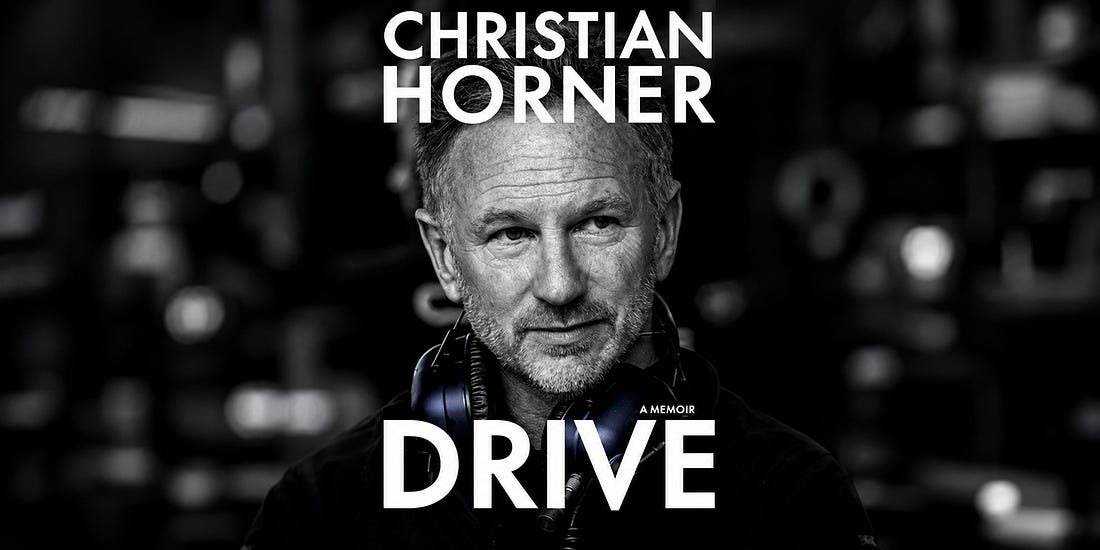
Christian Horner picked October 22, 2026 to publish his memoir. It is the fourth anniversary of Dietrich Mateschitz’s death. Horner calls the book a tribute to the man who backed him for seventeen years. Inside Red Bull, according to Bild, the date is read as a provocation. Both readings are probably correct, and that is the book in one sentence.
 Photo: ExperiencesXO
Drive arrives after fifteen months in which Horner said almost nothing. Then October 2026 came and he said everything, to anyone with a microphone. The pre-release extracts read less like a victory lap and more like a deposition. He names names. He attaches quotes. He assigns blame.
We have been through every extract and interview we could find and sorted the best of it by who gets hit. Some of this is new. Some of it has already been called a lie by the people involved. All of it tells you something about how one of the most successful organizations in modern sport actually ran, and why it stopped running once its founder died.

ABU DHABI 2021: HE OPENS THE BOOK WITH IT
Most sports memoirs start with childhood. Drive starts with the last lap of the 2021 season, and for the first time Horner says plainly that he applied pressure on race director Michael Masi.
His account: when race control first said the lapped cars would not be released, his “heart sank,” because Max would have to pass five cars in one lap. So he got on the line. “Come on, Michael, we need to get this race going.” Then: “It’ll be such a shame to end everything under a safety car.”
On the High Performance Podcast he added the context he thinks justifies it. He says he only learned at Barcelona in 2021, when the FIA started broadcasting race director communications, that Toto Wolff had been talking directly to Masi. In fifteen years with Charlie Whiting, Horner says he never once spoke to the race director himself. So he asked his team manager to patch him in, and from there both teams were working the referee all season.
He maintains Red Bull did nothing wrong, that the decision was within Masi’s remit, and that it had never been done before. The FIA’s own March 2022 report found Masi did not follow the safety car procedure correctly. Masi lost his job. Horner’s book treats the outcome as earned and the method as normal. Readers will split on that exactly the way they split in December 2021.
 Austin GP Photo: ExperiencesXO
HELMUT MARKO: THE MAIN TARGET
If the book has a villain, it is the 83-year-old Austrian who gave Horner his break and, by Horner’s account, spent the last three years working to end it.
The headline claim: two days before Horner was fired in July 2025, Marko was staying at the Horner family home as a guest. No warning. No hint. Horner told The Guardian he was disappointed Marko gave no indication of what was coming. Then came radio silence. The two have not spoken since a handshake on his final day.
It gets colder. Horner’s former partner Beverley Allen, mother of his daughter Olivia, died of eye cancer at 58 during the same stretch as his dismissal. He told BILD that Marko kept working toward his removal through that period and never offered condolences. Marko’s response, via F1 Insider: it is “a collection of untruths” and he will not address any of it individually.
The Times, which ran the first serialization, summarized the book’s portrait of Marko as abrasive, erratic, cold, unreliable and fundamentally disloyal. Horner does credit him for recommending a 31-year-old Arden boss to Dietrich Mateschitz in 2005. The gratitude, he says, ran out after Mateschitz died in 2022.
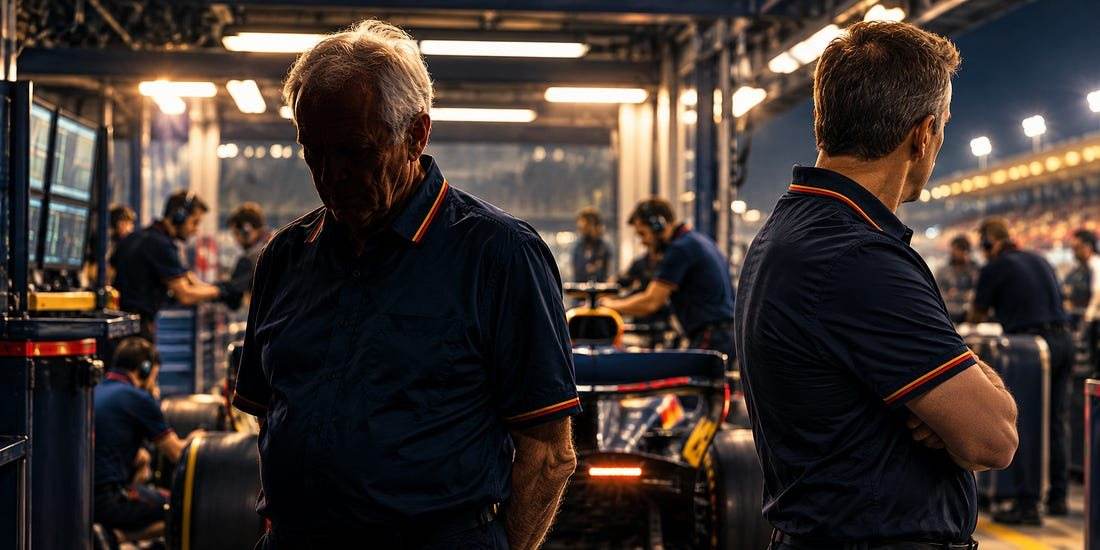
The operational complaint underneath the personal one is about information. Horner writes that Marko treated inside knowledge as currency and spent it freely, with favored outlets and with Mateschitz, and that the team eventually started deciding what could be said in his presence. His example is from 2008. Horner and David Coulthard had agreed Coulthard would announce his retirement at Silverstone, his home race, on his own terms. A month early, Marko stood beside him at a urinal and congratulated him on retiring. Coulthard walked back into the garage and told Horner he thought he had just been retired in a toilet. Horner calls Marko a wrecking ball. It is a funny story. It is also a description of a company where the adviser with the owner’s ear could override the executive’s process whenever he felt like it.
 Spa GP 2024 Photo: ExperiencesXO
THE VERSTAPPEN ORIGIN STORY, TWO VERSIONS
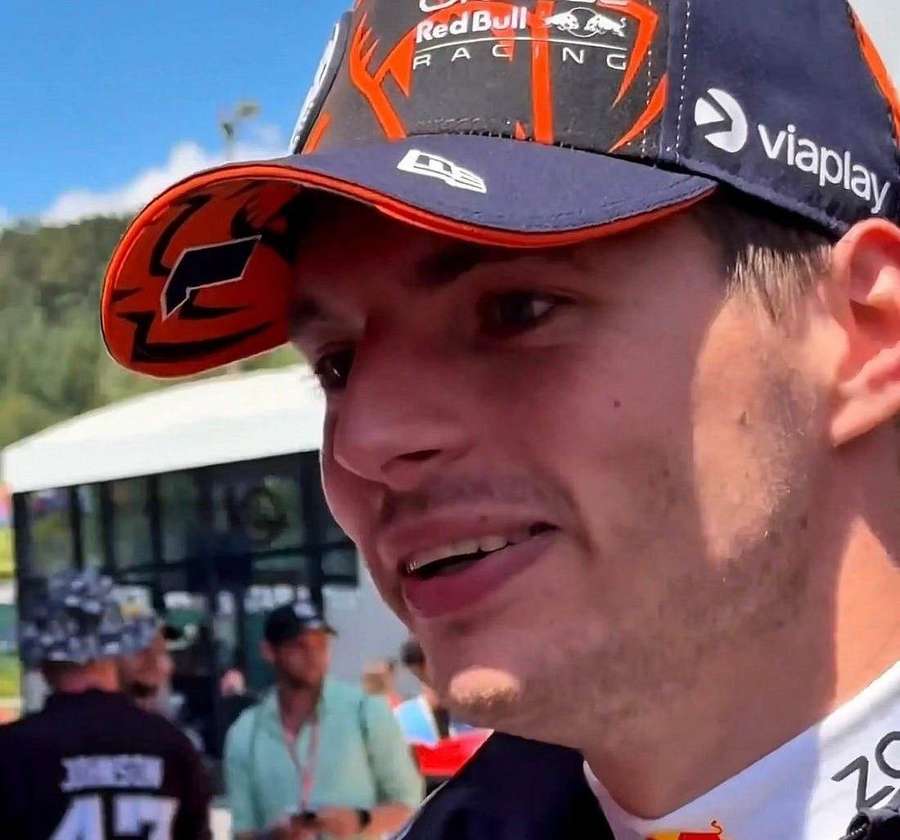
Here is where the book has already run into trouble. Horner claims Marko did not want a teenage Max Verstappen. The quote he attributes to Marko: Jos Verstappen is “a nightmare,” and “we don’t need this one.” In Horner’s telling, it was Jos who pushed the deal through.
Marko and Ralf Schumacher have both called this an absolute lie. Schumacher says Marko approached Max at eleven and a half and Jos said it was too early. Marko’s counterpunch: he brought Max into F1 and had to fight Horner to give him the Red Bull Racing seat four races into 2016, when Horner thought he was too inexperienced. Marko told De Telegraaf the same thing in the summer of 2026, before the book extracts appeared, so it is not a reactive story.
Horner’s reply is that the quotes were lifted in isolation, that he credits Marko in the book for spotting Max, and that Marko only committed once Niki Lauda started circling the teenager for Mercedes. Both men left Red Bull in 2025. They are now arguing about who built a thing neither of them owns.
Two men who ran the same company for twenty years are giving opposite accounts of how they signed the most important employee in its history. The book cannot settle it. Only the contracts and the emails could, and nobody is releasing those.
 Austin GP Photo: ExperiencesXO
THE DRIVERS HE SAYS HE WAS BLOCKED FROM SIGNING
This is the most commercially interesting thread for anyone who follows the driver market, because it describes a team principal who did not control his own driver lineup.
Fernando Alonso, ahead of 2008. Paperwork exchanged. Alonso’s side would only commit to one season. Mateschitz said two years or nothing, because Red Bull feared being a stopgap before Ferrari. Deal died. Flavio Briatore tried again in 2010, offering to swap Alonso for Mark Webber.
Charles Leclerc, 2023 and 2024. Horner met Leclerc’s manager and thought he was the perfect Verstappen teammate. Then Marko told him to forget it. Horner writes that he knew immediately the order did not come from Max, but that “someone somewhere” had decided. Alonso came up again in the same window, at the 2024 Japanese Grand Prix, and was shut down the same way. Carlos Sainz also visited Horner about a 2026 seat shortly before Horner was fired.
What Red Bull did instead was promote Liam Lawson, which Horner now calls a mistake. On the High Performance Podcast he went further: Gasly, Albon and Lawson all arrived too soon, and the reason was institutional. In his words, the junior program “didn’t justify its existence” in Marko’s mind unless it was promoting drivers quickly. That is a sentence about incentive design, not driving talent. A pipeline that has to prove its own value by shipping product early will ship product early.
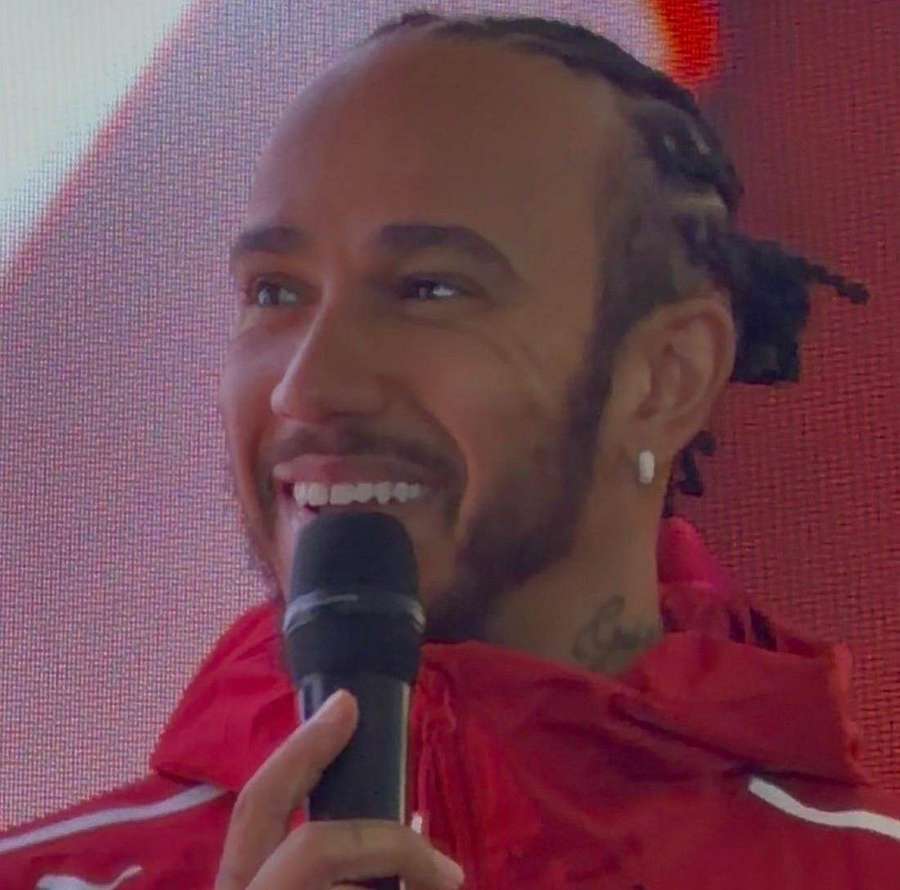 Photo: ExperiencesXO
LEWIS HAMILTON, ASCOT, 2012
The extract that got the most play this week. Horner writes that in 2012 Hamilton was losing heart at McLaren, that Anthony Hamilton’s number appeared on his phone, and that a secret meeting followed at Adrian Newey’s house near Ascot. Hamilton’s opening line, per the book: “What will it take to join you guys?”
Newey, who Horner says has no poker face, looked ecstatic. Marko looked unimpressed, because a Hamilton arrival would unsettle Vettel.
Simon Fuller, Hamilton’s manager, pitched it as the biggest sports deal since Muhammad Ali. Horner says the numbers were staggering and he did not push hard.
Mateschitz did not want Mark Webber replaced either. So Red Bull passed, and here is the part Horner is strangely proud of. When Lauda turned up at Mercedes a few months later, Horner told him to go for Lewis. He said the same thing to F1 Racing magazine in 2016: the idea was to weaken McLaren, and he never imagined Mercedes becoming the force it became. Hamilton signed for 2013 and won six titles there. Horner spent most of the next decade trying to beat the team he had helped assemble.
Two caveats. The book gives the Ascot meeting no date, and Hamilton has not commented. But this one is not new: Horner has been telling the Lauda part of the story for ten years.
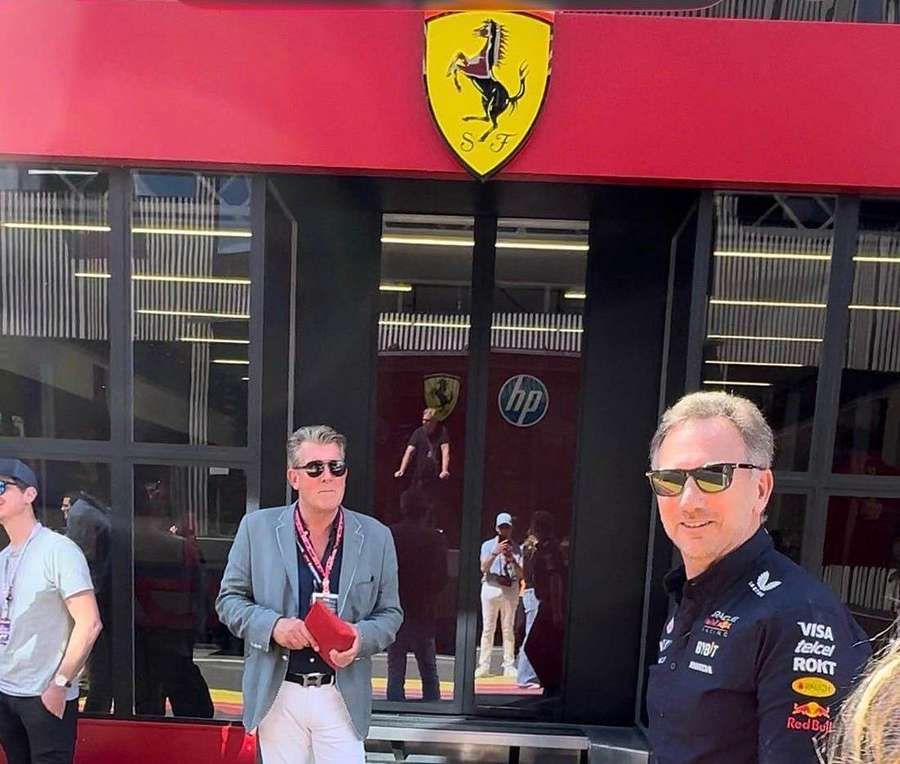 Photo: ExperiencesXO
NIKI LAUDA’S HOUSE CALL
Related, and less reported. Horner writes that around Christmas 2012, Lauda came to his house and offered him the Mercedes team principal job, with a salary Red Bull would never match. Lauda’s pitch included a description of Marko we will not print in full. Horner turned it down out of loyalty to Mateschitz and because Vettel was at his peak. Lauda hired Toto Wolff instead.
Ferrari tried too, and later. ESPN reported that John Elkann first approached Horner in 2022 to replace Mattia Binotto, and that Horner declined. Which means the man now describing Ferrari as a dream job has, by his own record, turned down Ferrari at least once and Mercedes once. Loyalty to a founder is a fine reason both times. It is also the reason he no longer has.
 Las Vegas GP 2023 Photo: ExperiencesXO
ADRIAN NEWEY: “AT THE FIRST SIGN OF ADVERSITY”
The Newey section is sharper than most expected. Horner dates his loss of trust to 2014, when Red Bull had a bad Renault engine, Vettel was leaving for Ferrari, and Ferrari came for Newey too. Horner writes that he stood behind Newey and believed Newey stood behind him, and that he learned otherwise when Newey wanted to abandon ship at the first setback. Newey stayed in 2014. He left for good in early 2025, for Aston Martin.
The ending was worse than the crack. Horner writes that he learned Newey wanted out when a Red Bull adviser told him Newey had written to one of the shareholders. Newey was at his drawing board on the other side of the glass. Horner walked over and was told to speak to Newey’s manager, Eddie Jordan, which Horner assumed was a joke. It was not. Newey then announced his Aston Martin deal at a press conference while still a Red Bull employee and ate lunch in the Milton Keynes canteen the next day as if nothing had happened.
For a book that leans on the phrase “people business,” the detail that stings most is a colleague of nineteen years routing the conversation through an agent. The most important technical partnership in the team’s history ran on trust that had already cracked a decade before it broke.
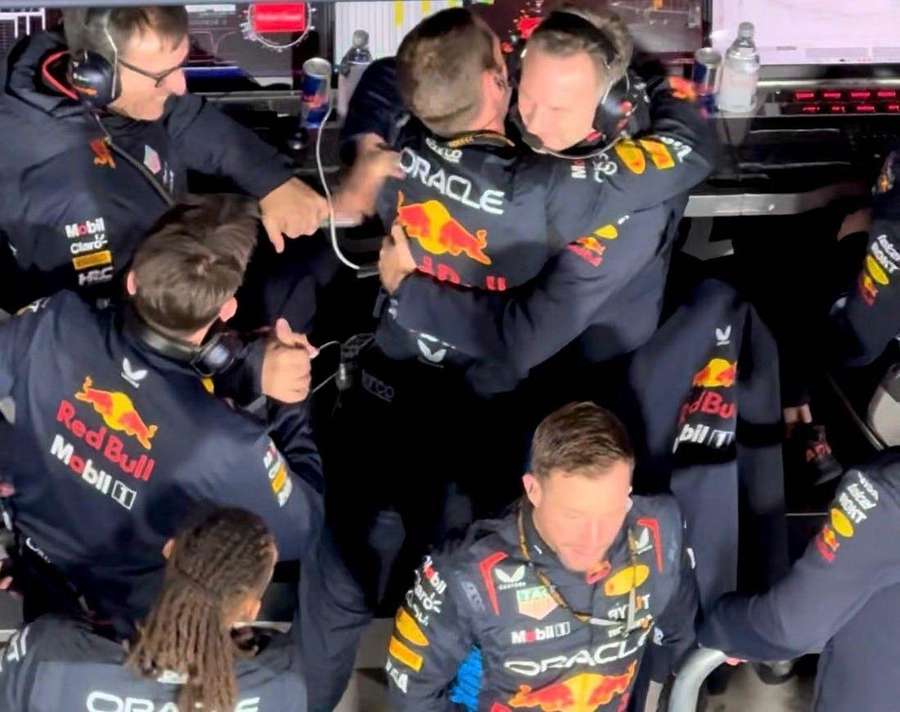 Las Vegas GP 2023 Photo: ExperiencesXO
THE SACKING: NO REASON GIVEN, AND £67 MILLION
Horner told The Guardian’s Donald McRae that he was never given a reason for his removal. His own theory: Red Bull felt “too much control” sat in his hands. He says the 2024 allegations against him, which two investigations dismissed, were not the cause. The book covers that episode in a chapter titled “Out come the wolves.” Asked whether Jos or Max Verstappen were behind the sacking, he said no, it was a Red Bull decision, and that after Mateschitz died, leadership changed.
The payout: Red Bull’s filed accounts show roughly £67 million in compensation. Earlier press reports had the number higher. He also describes panic attacks he did not recognize as panic attacks at the time, and a loss of identity after the job ended. He praised Wolff, of all people, for speaking openly about depression.
There is one note of thaw. Oliver Mintzlaff, the Red Bull executive who handled his exit, called him after the Red Bull Powertrains engine won its first race in October 2026. Horner says he texted Max afterward and Max was magnanimous. He also says he felt robbed not to be there for it.
He is less generous about what he left behind. In the Times serialization he said Red Bull has “lost its mojo, its presence, its vibe” since he walked out. Red Bull sit fourth in the 2026 constructors’ standings as of this week, which does not contradict him.
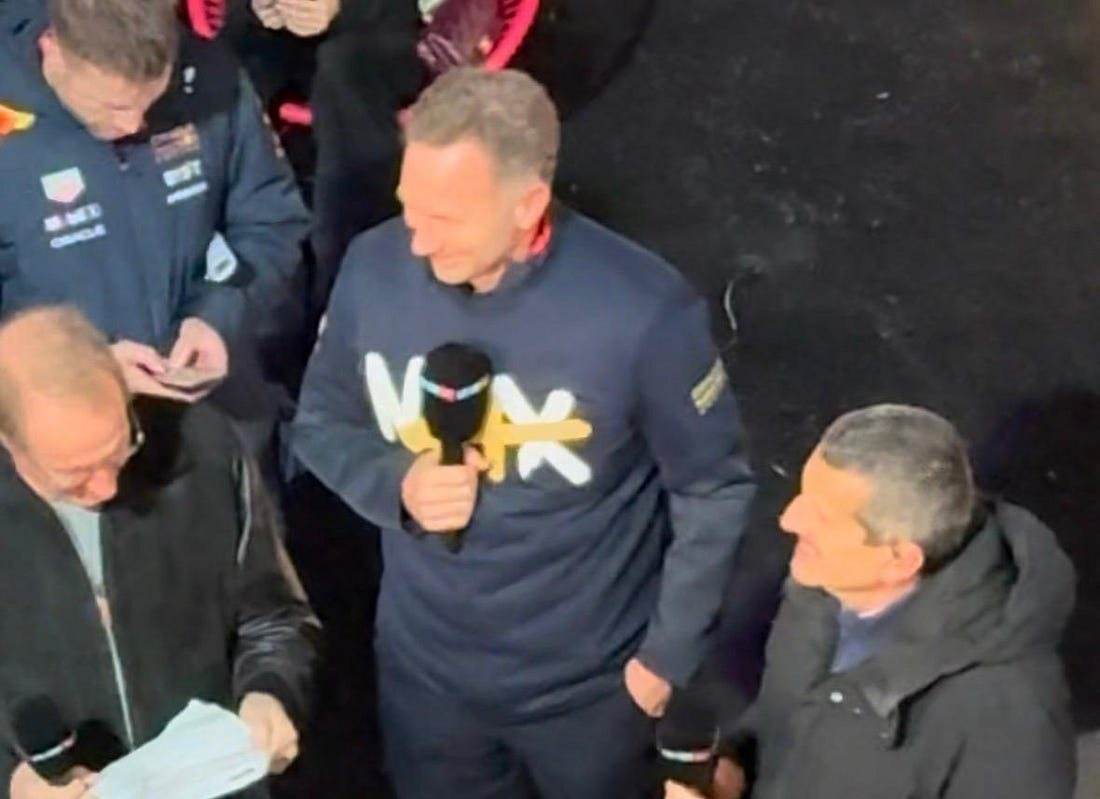 Las Vegas GP 2023 Photo: ExperiencesXO
THE NEAR-FIRING NOBODY KNEW ABOUT
One story that is not a grudge, just a good anecdote. In 2006, after two points in six races, Mateschitz and executive Danny Bahar decided to choose between Horner and Guenther Steiner. Horner was handed paperwork before Monaco saying his contract would not be renewed. David Coulthard finished third that weekend. Horner kept his job. Steiner went on to Haas and Netflix fame, and Horner has not been shy this month about who had the better career.
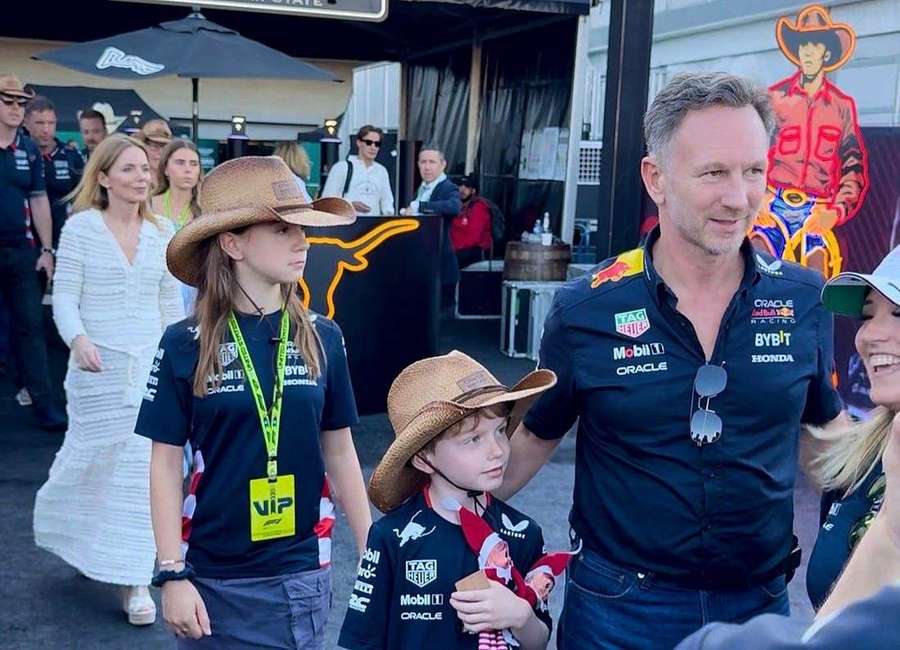 Austin GP 2023 Photo: ExperiencesXO
WHAT WE THINK THE BOOK IS ACTUALLY ABOUT
Strip out the names and the quotes and Drive is a case study in founder dependency. Horner’s Red Bull worked because Mateschitz backed him personally, settled disputes personally, and let Horner build what he wanted. Every major complaint in the book, from the blocked driver signings to the junior pipeline to the manner of the firing, traces back to the moment that personal authority disappeared in 2022 and a corporate structure in Austria replaced it. Once the founder was gone, the question of who actually built the thing was open, and this book is Horner’s attempt to answer it before anyone else does.
Horner says he wants back in, but only with ownership attached. He has clarified that his “dream job” comment about Ferrari was taken out of context and that Ferrari is not selling shares. Read the book as a pitch document for that next role. It tells any potential partner exactly what he will not tolerate again: a board that does not explain itself, an adviser who overrides the principal, and a driver program with its own agenda.
Whether that makes him the right hire is a different question. The man who wrote this book pressured a referee on the last lap of a title decider and is proud of it. Some owners will read that as a feature.
The publisher put one line from the book on the jacket, and it is Geri’s, not his: “Well, the higher you rise, the sharper the knives.” Horner writes that her logic was hard to argue against. It is also the only line in the extracts that does not blame anyone else for holding them.