Women Are Formula 1’s New Commercial Force
How F1 reporters, strategists and drivers’ partners are reshaping the sport’s fashion, beauty and luxury economy
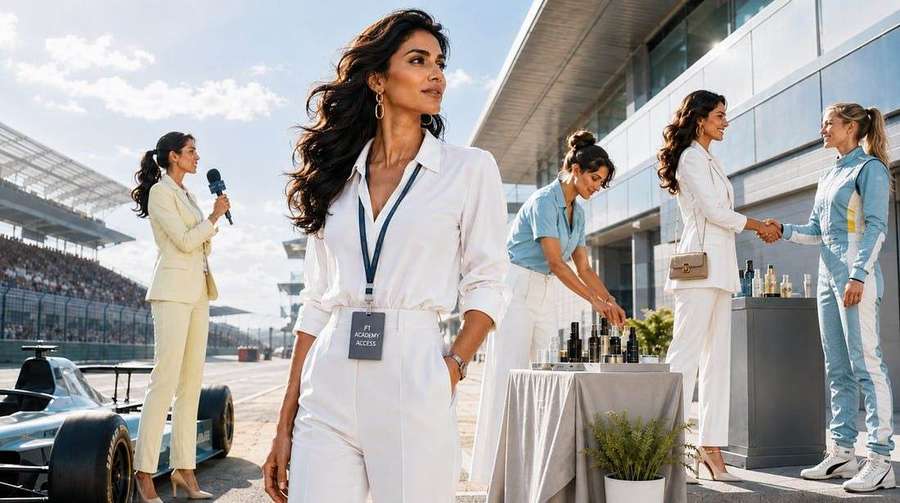
Meaningful official presence in F1 once required a seven-figure budget. That is no longer the only route.
Women around the paddock, including reporters, strategists, founders and drivers’ partners, have built global audiences that give brands a second, lower-cost entry point. A campaign with one of them buys creator distribution, consumer attention and cultural relevance rather than official names, logos or hospitality. For many fashion and beauty brands, that is enough.
In 2026 the market became visible. Fashion houses, beauty companies and consumer brands used race weekends, paddock appearances and founder-led launches to enter F1 culture, some alongside official rights, others without them.
F1 now has a commercial layer that operates around and beyond its conventional rights inventory. The strongest programs define ownership, usage and disclosure early, then measure against a clear business goal. Paddock visibility is simply one way of delivering it.
A MARKET LARGE ENOUGH TO AFFECT STRATEGY
F1 reported 827M fans in 2025, with women at 42%. Women are now close to half of one of the world’s largest global sports audiences, and younger fans are particularly receptive to sponsor involvement. For fashion, beauty, wellness, travel and luxury companies, this is already a mass consumer market.
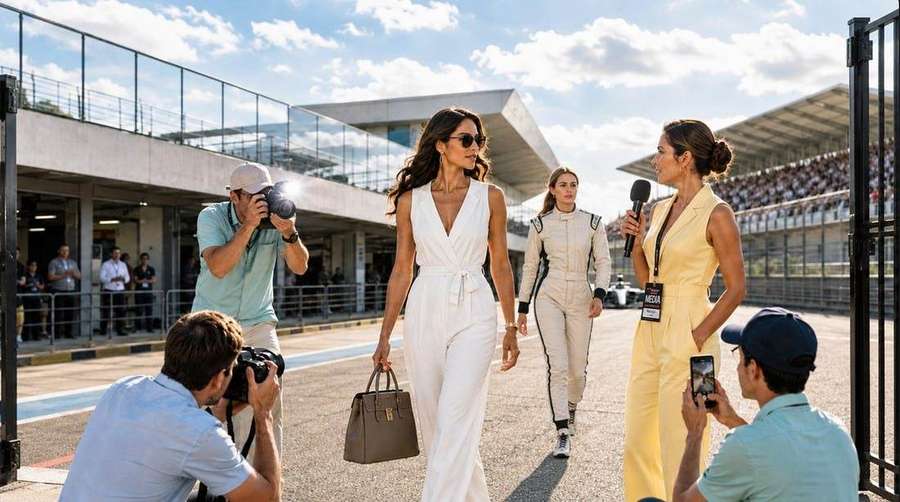
Race weekends concentrate that opportunity inside a high-output media environment. A woman’s paddock arrival can generate news photographs, short video, fan edits, fashion coverage and shopping links before any personal post is published. LVMH’s 10-year F1 agreement confirms the championship’s place in global luxury. The women around the paddock give individual brands a more focused route into the surrounding culture.
The F1 driver partner follower distribution
The 18 partners included in this analysis, ordered by their combined Instagram and TikTok followers. Observed August 2026.
- Media / entertainment
- Model / creator
- Athlete / founder
- F1 media / profession
- Not publicly stated
- 1M following
- Kim Kardashian · 355.3M
- Alexandra Leclerc · 7.9M
- Maia Reficco * · 5.5M
- Kelly Piquet · 2.5M
- Lily He · 2.2M
- Kika Gomes · 2.0M
- Yael Shelbia · 1.8M
- Rebecca Donaldson · 1.2M
- Carmen Mundt · 1.1M
- Melissa Jiménez · 640K
- Flavy Barla · 512.7K
- Carola Martínez · 242K 🔒
- Tiffany Cromwell · 241K
- Lauren Fitzsimmons · 60.5K
- Egle Hülkenberg · 53.6K
- Isabella Bernardini * · 40.2K
- Alicia Torriani · 1.5K 🔒
- Lily Zneimer · 677 🔒
Figures combine Instagram and TikTok following, are not deduplicated across platforms and do not represent unique reach. Dot size uses a cube-root scale. * TikTok-led presence. 🔒 Private or inactive account.
COMMERCIAL AUTHORITY COMES FROM DIFFERENT SOURCES
- F1 professional authority: Reporters, presenters, analysts, strategists and team personnel contribute expertise and recurring access earned through their work. Examples include DAZN España F1 reporter Melissa Jiménez, Sky Sports F1 presenter Natalie Pinkham, strategist-turned-analyst Ruth Buscombe, and former driver and analyst Naomi Schiff.
- Independent authority: Athletes, models, founders and creators bring careers and audiences developed outside a driver relationship. Examples include professional golfer Lily He and Brazilian model and media professional Kelly Piquet.
- Relationship-based visibility: Drivers’ partners may build audiences around race-week access and convert that attention through campaigns or companies. Examples include Alexandra Leclerc and Carmen Mundt.
The F1 driver partner market map
A brand-selection map by audience scale and publicly visible professional identity. Columns are combined Instagram and TikTok following. Observed August 2026.
| Under 100K | 100K to 999K | 1M to 9.9M | 10M+ | |
|---|---|---|---|---|
| Media & entertainment | Maia Reficco *AR/US · 5.5M | Kim KardashianUS · 355.3M | ||
| Model, creator & influencer | Flavy BarlaFR · 512.7K | Alexandra LeclercFR/MX · 7.9M Kelly PiquetBR · 2.5M Kika GomesPT · 2.0M Yael ShelbiaIL · 1.8M Rebecca DonaldsonGB/SC · 1.2M | ||
| Athlete, founder & operator | Egle HülkenbergLT · 53.6K | Tiffany CromwellAU · 241K | Lily HeCN · 2.2M Carmen MundtES · 1.1M | |
| F1 media & other professions | Alicia Torriani 🔒MC · 1.5K | Melissa JiménezES · 640K | ||
| Profession not publicly stated | Lauren FitzsimmonsCA · 60.5K Isabella Bernardini *BR · 40.2K Lily Zneimer 🔒GB · 677 | Carola Martínez 🔒MX · 242K |
Figures combine Instagram and TikTok following, are not deduplicated across platforms and do not represent unique reach.
Country codes indicate publicly associated national, ethnic or cultural markets relevant to potential brand fit; they do not represent audience location or demographic data.
Figures were verified directly from public platform profiles. * TikTok-led presence. 🔒 Private or inactive account.
FIVE ROUTES FOR BRANDS INTO F1’S COMMERCIAL PADDOCK
The relationships visible in 2026 are easier to understand by asking who controls the asset and what the brand receives. A brand may use more than one route at the same time.

- Visible association: A product appears in paddock coverage without public evidence of a contract. Example: Ruth Buscombe’s Hermès accessories.
- Direct relationship: A brand contracts with a woman for content, appearances or usage rights. Example: Kelly Piquet’s Anastasia Beverly Hills campaign.
- Convened network: A brand funds the setting and content around a group. Example: Alo’s Monaco program. Attendance does not establish a paid agreement with every guest.
- Product participation and ownership: A woman co-creates a product, owns equity or builds a business. Example: Alexandra Leclerc’s Frame capsule.
- Official rights: A brand contracts with a team, championship or series for names, logos, inventory and hospitality. Example: ELEMIS’s Aston Martin partnership.
1. VISIBLE ASSOCIATION
Kim Kardashian, partner of Ferrari driver Lewis Hamilton, wore Gucci throughout Monaco Grand Prix weekend, including a custom race-day dress, and appeared in the Ferrari garage. The appearance is separate from Gucci’s announced 2027 Alpine title partnership.
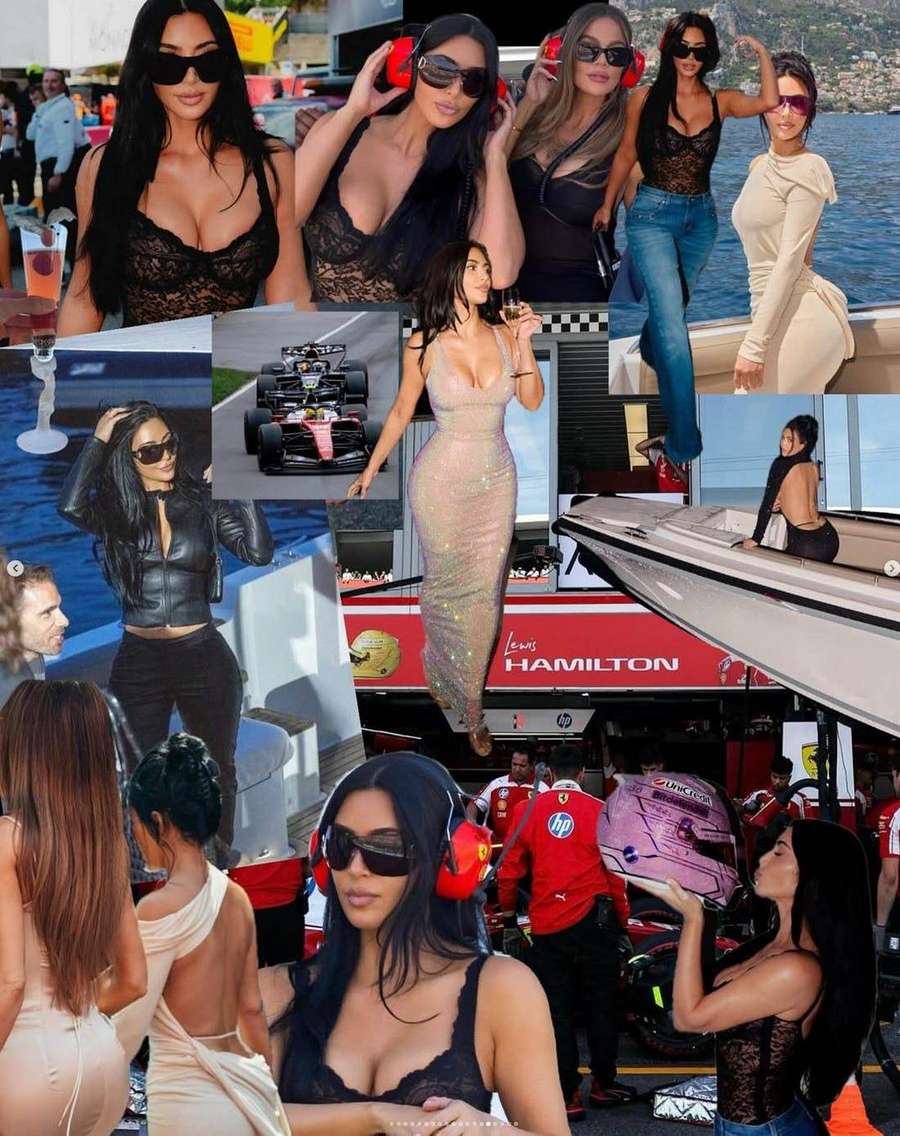 Kim Kardashian for Gucci - Jun 10, 2026
Alexandra Leclerc, partner of Ferrari driver Charles Leclerc, was photographed in Meshki, Messika, Bulgari and Jacquemus.
Ruth Buscombe, F1 TV analyst, repeatedly carried Hermès accessories.
Visible association creates editorial value but gives the brand little control. It may have no right to reuse images, approve captions or imply endorsement. Brands that want those rights move to a direct relationship or official package.
2. DIRECT RELATIONSHIPS
Professional authority supports direct relationships without relying on a driver connection.
Ruth Buscombe is a Motorsports Ambassador and Technical Advisor for Amazon Web Services.
Naomi Schiff, former racing driver and Sky Sports F1 analyst, disclosed a Marks & Spencer ambassadorship, appeared in PUMA’s She Moves Us platform, hosted the launch of the Lacoste × Alpine collaboration and worked with Charlotte Tilbury.
Jamie Chadwick, racing driver and Sky Sports F1 analyst, is a Rolex Testimonee.
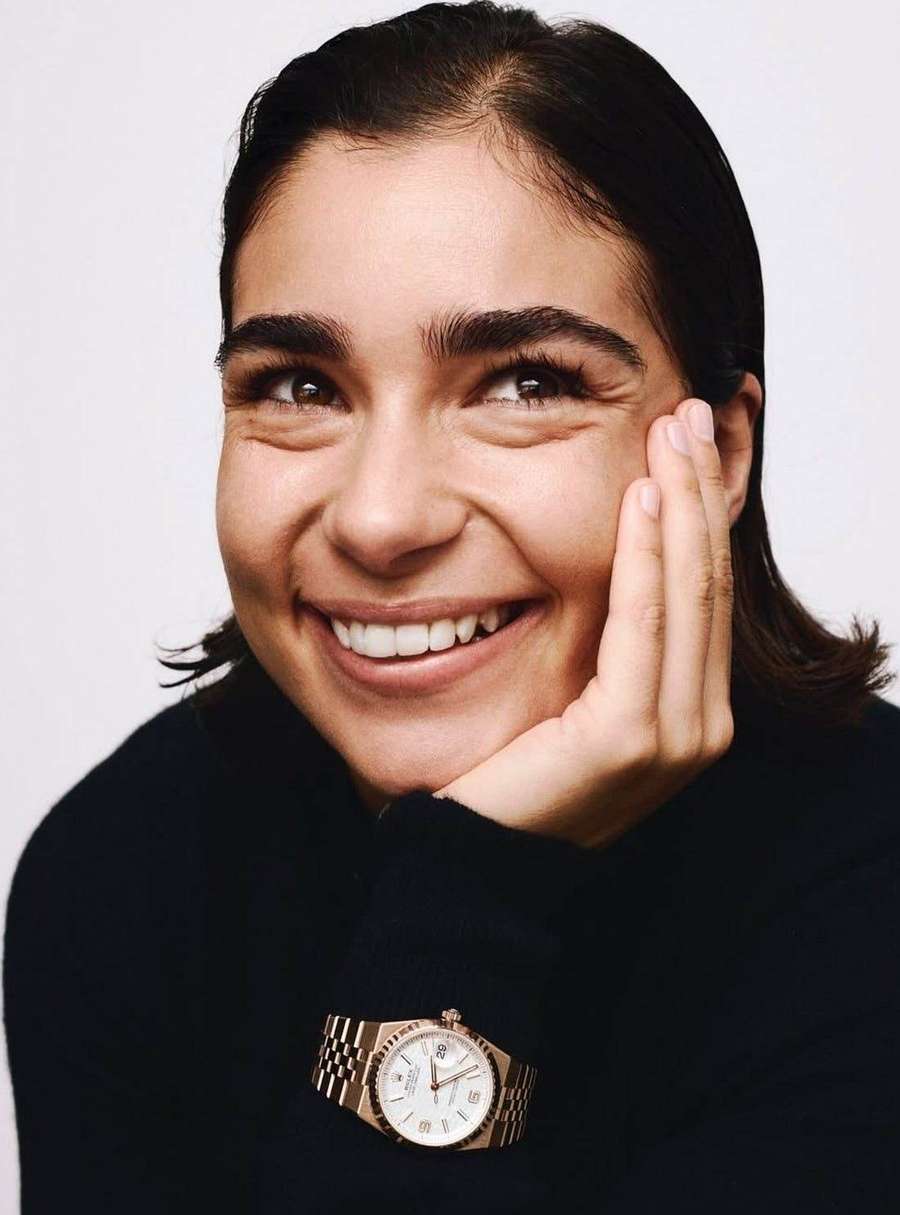 Jamie Chadwick for Rolex - Dec 3, 2025
Melissa Jiménez, DAZN España F1 reporter, is represented for commercial work and has collaborations with, Disney, Nestlé, Lidl, Playmobil, Oysho, ISDIN and others. Her commercial authority comes from professional work independent of a driver relationship.
Kelly Piquet, Brazilian model and partner of Red Bull driver Max Verstappen, appeared in an F1-themed Anastasia Beverly Hills campaign filmed at Zandvoort. Eudora sponsored a Vogue Brasil cover and launched What A Glam, connecting her Brazilian identity and motorsport credibility to beauty content. Both brands entered F1 culture through her distribution without buying official rights.
Alexandra Leclerc has disclosed work with Alo, L’Oréal Paris, Jacquemus and Rhode.
Carmen Mundt, fiancée of Mercedes driver George Russell, partnered with Forever New for the Canadian Grand Prix.
Kika Gomes, Portuguese model and partner of Alpine driver Pierre Gasly, published ads for Burberry, Givenchy Beauty, Bulgari, Michael Kors, Calvin Klein and Lacoste among others.
Flavy Barla, medical student, former Miss Côte d'Azur and partner of Haas driver Esteban Ocon, runs disclosed campaigns for Kérastase, Lancôme, Armani Beauty, Charlotte Tilbury and CurrentBody. Tiffany & Co. booked the couple for its holiday campaign and returned within eight weeks for Valentine's Day.
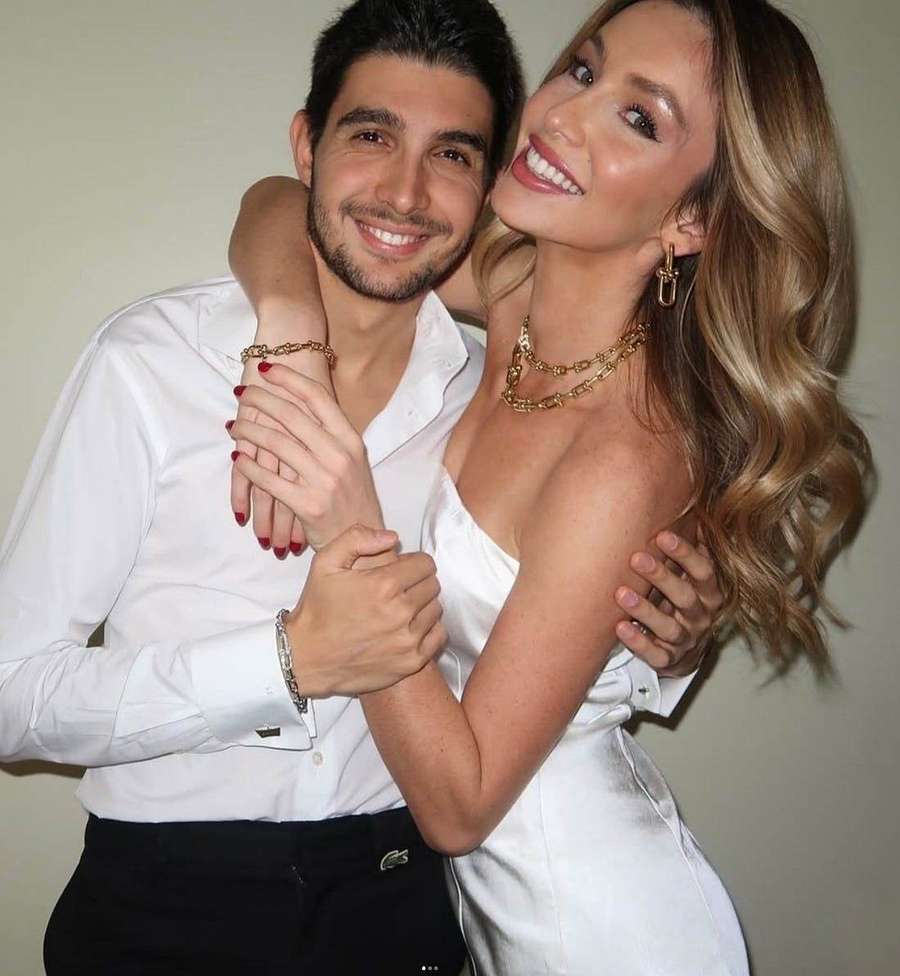 Flavy Barla and Esteban Ocon for Tiffany - Dec 20, 2024
Lily He, a professional golfer and fiancée of Williams driver Alex Albon, entered F1 with an independent commercial platform that already included FILA, Sands, Aramco and TUMI, plus China-market channels Weibo and Xiaohongshu. F1 added race-week visibility to a platform she already controlled. Some of the names Lily worked with are: Meta, Citibank and Mastercard, Marina Bay Sands, Burberry, Roberto Cavalli, Calvin Klein, Ferragamo, MiuMiu, JW Anderson, David Yurman, UGG and Summer Fridays.
Alexandra Leclerc, Kelly Piquet, Rebecca Donaldson, Lily He and Flavy Barla each maintain ShopMy storefronts. Campaign pricing should separate content creation, posting, amplification, brand reuse and exclusivity.
3. BRAND-CONVENED NETWORKS
Alo used Monaco Grand Prix week for two programs: a chartered yacht as a content studio and Mareterra Pilates sessions that drew Alexandra Leclerc, Kelly Piquet, Kika Gomes, Rebecca Donaldson, Carmen Mundt, Flavy Barla, and Hannah St. John. Videos from the program reached far beyond the guest list.
Apple TV and Beats hosted a Miami Grand Prix dinner with Lily He, Kelly Piquet, Magui Corceiro, Carmen Mundt, Rebecca Donaldson and F1 creator Lissie Mackintosh. Apple already holds F1’s exclusive U.S. broadcast rights, so the dinner extended an institutional media investment into race-week culture. Apple also selected Lissie Mackintosh to moderate an event with Susie Wolff about her memoir and F1 Academy.
Convened networks purchase the environment and the chance to connect multiple audiences. The brand controls the venue, program and content plan.
4. PRODUCT PARTICIPATION AND OWNERSHIP
CO-CREATED PRODUCTS
Kelly Piquet co-created Grand Pout with Unicosmetics.
Alexandra Leclerc co-created a 21-piece Monaco-inspired capsule with Frame that launched during Miami week and was worn in the paddock at Miami and Montréal. Both collaborations gave each woman a product- development role and produced the strongest-performing videos in their respective brands’ histories.
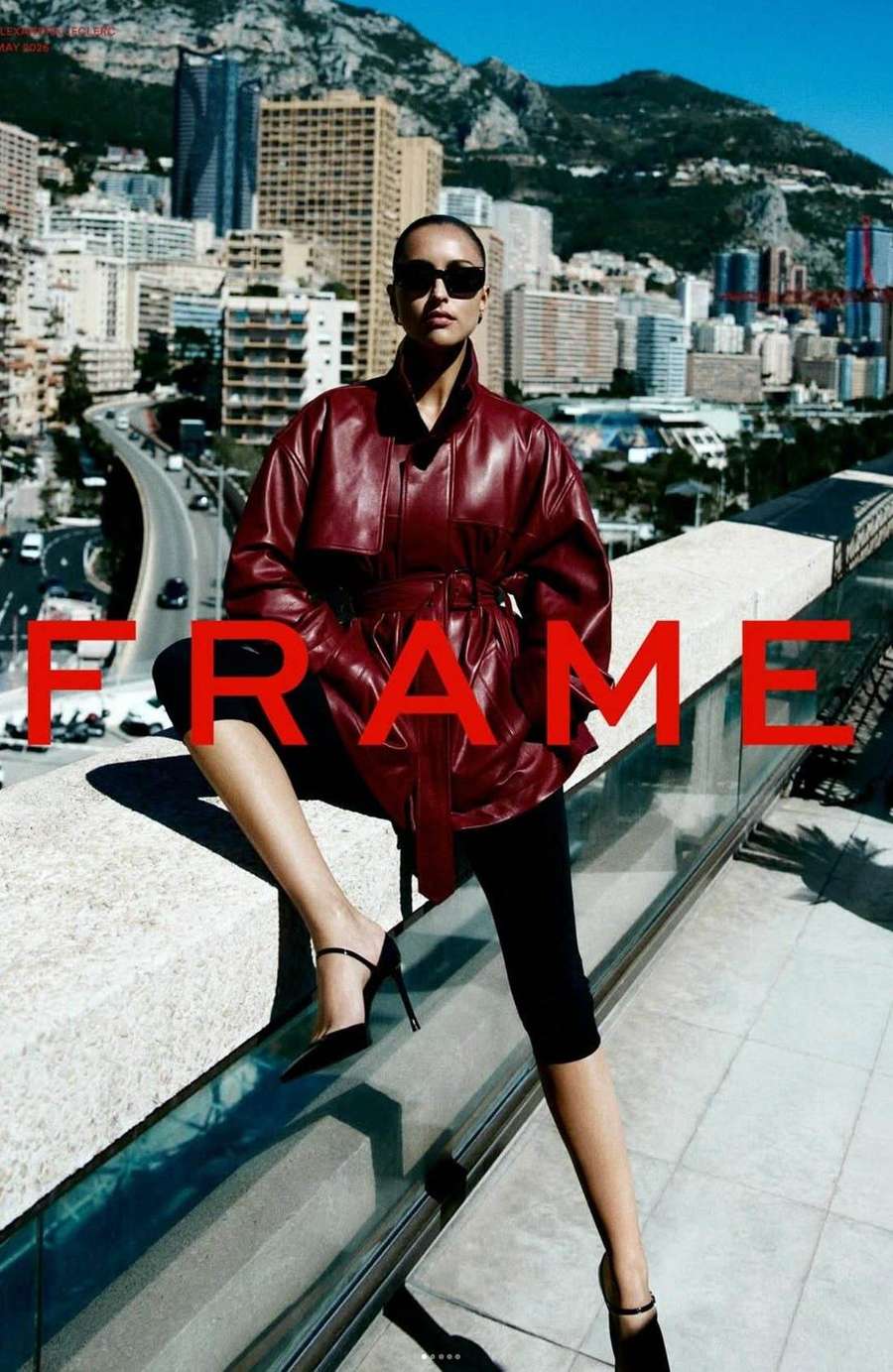 Alexandra Leclerc collaboration with FRAME - May 1, 2026
OWNED COMPANIES
Carmen Mundt co-founded Barriers, a Barcelona-based microbiome skincare company, and used Miami, Monaco and Spanish Grand Prix periods to introduce it.
Egle Hülkenberg, fashion entrepreneur and wife of Audi driver Nico Hülkenberg, owns and operates EGLE, a direct-to-consumer crochet resortwear line.
Tiffany Cromwell, Olympic cyclist and partner of Cadillac driver Valtteri Bottas created OATH Gin with Valtteri, and they jointly own The Vineyard Retreat; both ventures use the couple as visible operators.
Ownership changes the time horizon. Campaign income depends on a contract; equity can outlast a team move or a change in personal circumstances.
5. OFFICIAL RIGHTS
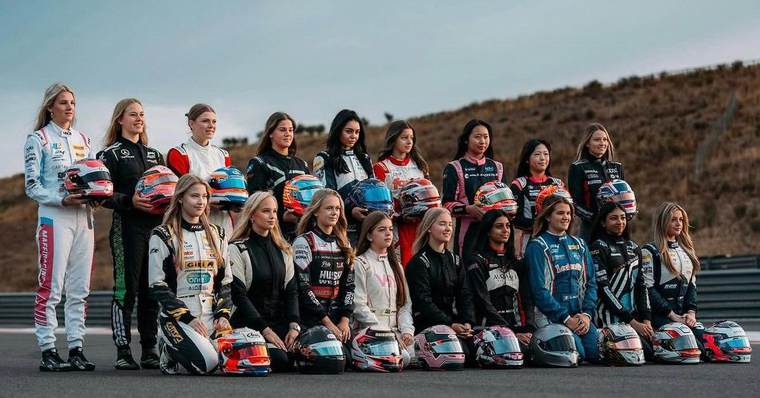
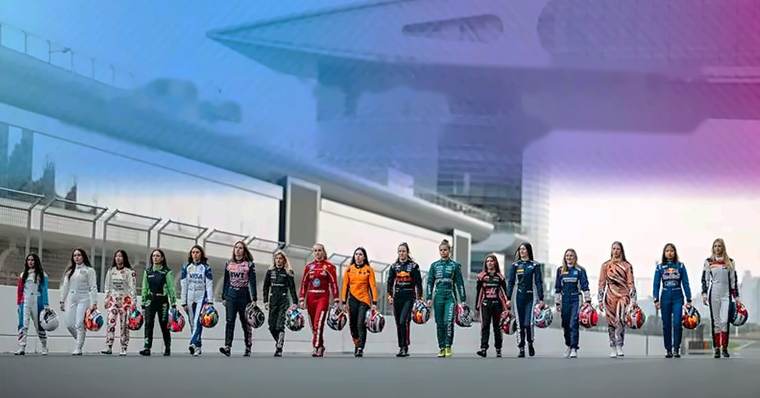
F1 Academy offers the clearest women-centered inventory. Managing director Susie Wolff has built a partner program that includes Charlotte Tilbury, Tommy Hilfiger, American Express and PUMA. The series combines international distribution, a substantial female audience and a visible car asset.
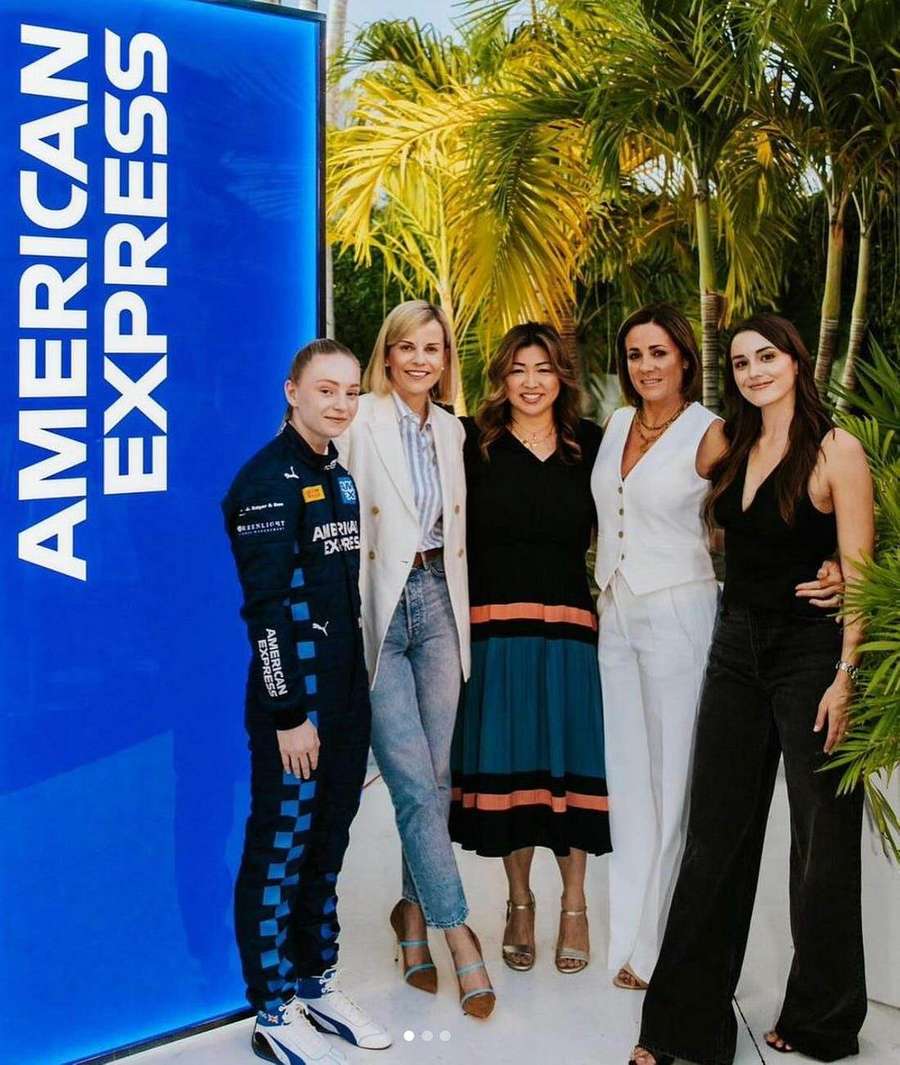 Susie Wolff launching the American Express & F1 Academy partnership - May 2, 2024
ELEMIS became Aston Martin’s first Official Skincare Partner in 2025. The brand also works directly with Jessica Hawkins (Aston Martin’s Head of F1 Academy and Driver Ambassador) and Natalie Pinkham, using ambassador and content relationships to activate the institutional platform.
Anastasia Beverly Hills holds a multi-year Beauty Team Partner agreement with Red Bull Racing and Racing Bulls Academy, a different contractual structure from Kelly Piquet’s personal campaign.
The LEGO Group’s 2026 F1 Academy launch used professional paddock talent: Ariana Bravo (F1 TV and Channel 4) hosted the Las Vegas unveiling.
HOW BRANDS COMBINE THE ROUTES
The strongest programs combine routes. A brand may pair a personal campaign with official rights, extend a media agreement through race- week hospitality, or connect a disclosed partnership to a convened network. Each component should retain its own contract, evidence standard and performance measure.
Where the F1 driver partner market creates value
A brand-selection map of audience scale and publicly visible commercial infrastructure. Observed August 2026.
- Media / entertainment
- Model / creator
- Athlete / founder
- F1 media / profession
- Not publicly stated
Operators before audience
Founders whose businesses outweigh their follower count.
- Tiffany Cromwell · 241K
- Egle Hülkenberg · 53.6K
Scaled commercial engines
Scale paired with products, ownership or repeatable monetization.
- Kim Kardashian · 355.3M
- Alexandra Leclerc · 7.9M
- Kelly Piquet · 2.5M
- Lily He · 2.2M
- Carmen Mundt · 1.1M
Presence on their own terms
Audiences shaped by other priorities, from studies and parallel careers to full privacy.
- Melissa Jiménez · 640K
- Flavy Barla · 512.7K
- Carola Martínez · 242K 🔒
- Lauren Fitzsimmons · 60.5K
- Isabella Bernardini * · 40.2K
- Alicia Torriani · 1.5K 🔒
- Lily Zneimer · 677 🔒
Reach-led collaborators
Large audiences suited to campaigns, launches and distribution.
- Maia Reficco * · 5.5M
- Kika Gomes · 2.0M
- Yael Shelbia · 1.8M
- Rebecca Donaldson · 1.2M
Dot size reflects combined Instagram and TikTok following on a cube-root scale. Platform totals do not represent unique reach. Placement reflects public evidence. It does not value a person, estimate compensation or infer undisclosed agreements. * TikTok-led presence. 🔒 Private or inactive account.
Where F1 driver partner audiences create brand value.
WHAT THIS MEANS FOR BRAND DECISION- MAKERS

Treat the five routes as a choice set, not a hierarchy. Match the route to the outcome:
- Concentrated attention or product launch → Direct relationship or co-created product with a high-fit partner.
- Category presence without official marks → Visible association or convened network. Budget for content rights; do not assume reuse or exclusivity.
- Year-round recognition, hospitality or protected names/logos → Official rights. The campaign route cannot substitute for these assets.
Before any fee discussion, lock four variables: audience and geography, deliverables, usage/reuse period, and exclusivity. Price the difference between a single post and a multi-asset package, then measure against the business goal (sales, sampling, traffic, brand lift) rather than views alone.
Industry planning conventions typically place a high-reach Instagram post in the low-to-mid five figures and a multi-asset race-week package in the low-to-mid six figures, still a fraction of conventional team or championship inventory. Actual fees vary with production, rights, exclusivity and term.
WHY TEAMS AND F1 SHOULD CARE
Paddock activity expands the sponsorship market. A focused campaign can become a first transaction with F1 culture; F1 Academy and team packages create a path toward larger rights. This forms a commercial funnel for beauty, fashion and consumer brands that might otherwise stay outside motorsport.
Teams benefit from a broader cultural footprint. Paddock fashion and beauty coverage reaches readers who may never consume a technical race report. That attention supports the sport’s relevance, but F1 and the teams need clear rules for names, logos, credentials, filming and conflicts among official partners.
Governance matters. Paid partnerships, gifts, affiliate links and editorial credits require different disclosure rules. F1 Academy adds further responsibility because several drivers are minors.
THE OPERATING RISKS CHANGE BY ROUTE
False attribution is the most immediate risk. Public credits for Ruth Buscombe’s Hermès accessories or Alexandra Leclerc’s jewelry establish product visibility, not sponsorship. Brands and creators should identify whether an appearance is a disclosed partnership, an editorial credit or a relationship with unknown terms.
Personal relationships can change during a season. Agreements should attach value to the woman’s audience, work and intellectual contribution. Hannah St. John’s Monaco Alo attendance and Australian Grand Prix jewelry appearance remain part of the 2026 record even though her relationship with Liam Lawson had reportedly ended by the research cutoff.
Framing creates another risk. A private guest list should not be read as representing every woman in the sport. Rights create another boundary. A creator may own her photograph while lacking permission to use team names, logos or event imagery in paid advertising. Contracts should allocate approvals and distinguish personal posting from paid media and global campaign reuse.
A MARKET BUILT AROUND AGENCY
The women around F1 have created a commercial layer that reaches beyond the garage. They distribute fashion and beauty, convene communities, co-create products, build companies and operate institutional platforms. Brands gain a flexible route into F1 culture; teams and the championship gains new categories of commercial demand.
Commercial participation remains optional. A woman may build a company, accept selected campaigns or keep her life private, and each choice deserves the same respect. The women create the audience and the cultural access. A durable market leaves them in control of both.
Disclaimers: This public-source analysis is based on information available as of August 2026. It does not attempt to register private contracts. An outfit credit, gift, invitation or tagged brand is not treated as proof of payment. The relationships named between women and brands are illustrative examples drawn from publicly visible activity and do not constitute a complete or exhaustive list.