Kimi Antonelli: Youngest F1 Champion Ever, and the Bet Mercedes Made at 12
Youngest champion in F1 history by more than three years. No team had ever put an 18-year-old straight into a front-running car. Wolff decided in five minutes, and a 52G crash did not change his mind.
Listen to this article 11 min, narrated
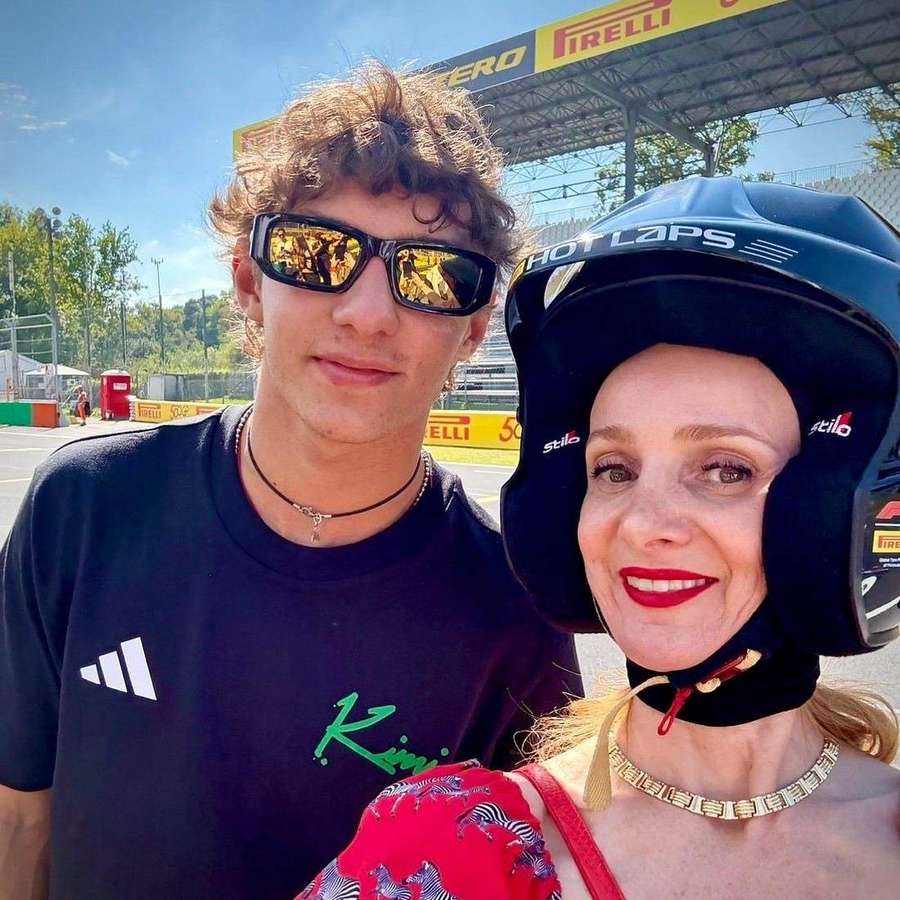
Kimi Antonelli walked into the Mexico City paddock on November 1, 2026 holding his younger sister Maggie's hand. A few hours later he was Formula 1 World Champion. He crossed the line with the two points he needed, and at 20 years and 68 days he takes Sebastian Vettel's record as the youngest champion, set in 2010 at 23 years and 134 days, by more than three years. He is Italy's first champion since Alberto Ascari in 1953, and he did it in a Mercedes, nine years after Ferrari sent an 11-year-old home from Maranello. The story of this title is a story about judgment under uncertainty: a team that put a teenager into a championship car with no midfield apprenticeship, held its nerve through a crash in his first practice session and a rookie year with two collisions and a long summer of nothing, and was proven right inside two seasons. We take the career in order, from the garage to Sunday, and ask what Mercedes saw that others did not.
View on Instagram · @mercedesamgf1
THE KID IN THE GARAGE
Antonelli was born in Bologna on August 25, 2006 to a racing family. His father, Marco Antonelli, is a touring-car and GT driver who founded Antonelli Motorsport in 1993 and AKM Motorsport in 2020, both based in San Marino and racing GT cars and Italian Formula 4; his mother, Veronica Pomaro, has worked in the team since 1997, and Maggie is a fixture at his races. Veronica has said the baby was in the team garage at a month old, asleep in his pram while the crew worked around him, and Marco has told how he once sneaked a small Kimi into a paddock at Hockenheim that barred children. Marco's favorite story is from Adria, when Kimi was 10 and sat on his father's lap in a Lamborghini Super Trofeo car, steering and changing gear while Marco worked the pedals; they built up the pace lap by lap until the car snapped sideways at the end of the straight and the boy caught it. Kimi's own account is simpler: his father brought him to the races from the time he was born, and the passion was transmitted there. He first drove a kart at five and a half and began racing at 7 in his father's team.
View on Instagram
The parallel with Max Verstappen is real and worth stating plainly. Both grew up inside a parent's racing operation, the sporting-fathers pattern we wrote about in July, both were in the paddock before they could read a timing screen, and both arrived in Formula 1 with a decade of competitive instinct already built. Marco is still in the Mercedes garage on race weekends, and his son runs to him after wins. The support had a limit the family states itself: Marco told Sky Sports in Austin in October 2026 that the family could not fund a career to the top on its own. Toto Wolff told La Gazzetta dello Sport that the one danger with young drivers is pressure, and that Antonelli "has always had an excellent structure and a model family around him."
View on Instagram
THE DOOR FERRARI DID NOT OPEN
Ferrari saw him first. In his father's telling to Formula Passion, Kimi was called up to Ferrari as a promising karter, spotted by Massimo Rivola, who then ran the Ferrari Driver Academy; he was 11 and tried the academy's simulator in Maranello. Maurizio Arrivabene, then Ferrari's team principal, decided against him, and Marco has given the reason two ways in two interviews, "too young" for the program and, to Quotidiano Nazionale, "too small." A few months later, at the end of 2017, Mercedes called. Kimi's version matches: "I was too young to be part of the Ferrari driver programme," he said in 2022, and after a kart race the call from Mercedes came and "of course we didn't say no." Mercedes signed him to its junior program at 12.
That is a difference in appetite more than a Ferrari failure. One team wanted a driver old enough to evaluate on the usual timeline; the other was willing to buy an option on a 12-year-old and wait.
THE RESULTS THAT JUSTIFIED THE OPTION
What Mercedes bought kept paying. Antonelli won the senior European karting championship in 2020 and again in 2021, then won the Italian and ADAC Formula 4 titles in 2022, the Formula Regional Middle East and Formula Regional European titles in 2023, and went to Formula 2 with Prema in 2024, skipping Formula 3 entirely, with Sprint and Feature Race wins at Silverstone and the Hungaroring by midsummer. We watched it ourselves in Austin in October 2024, when a 17-year-old who was not yet even a reserve driver walked the paddock with fans lining up for photos and telling him they could not wait to see him on the grid.
View on Instagram
Then came the decision that defines this title. When Lewis Hamilton told Mercedes he was leaving for Ferrari, Wolff said he made up his mind to promote Antonelli within five minutes, calling the choice instinctive. The team gave him his first Formula 1 weekend session at Monza on August 30, 2024, days after his 18th birthday. He went fastest on his first lap, faster on his second, and crashed at the Parabolica at 52G ten minutes into the session. The signing was already done; the Saturday press conference announcing him as Hamilton's replacement had been scheduled before Friday's session, and Mercedes held it as planned. Wolff has said since that he never saw the decision as risky: "There aren't many drivers capable of winning everything right from karting like Kimi."
View on Instagram
THE ROOKIE YEAR THAT TESTED THE BET
The precedent did not exist. Verstappen served a season and a half at Toro Rosso before Red Bull. Hamilton went straight into a McLaren, but at 22 after three years of GP2 and Formula 3. Antonelli started at 18, the third-youngest driver ever to start a Grand Prix, in a car that had won eight constructors' titles in the previous dozen years, beside a teammate in George Russell who had just beaten Hamilton over a season.
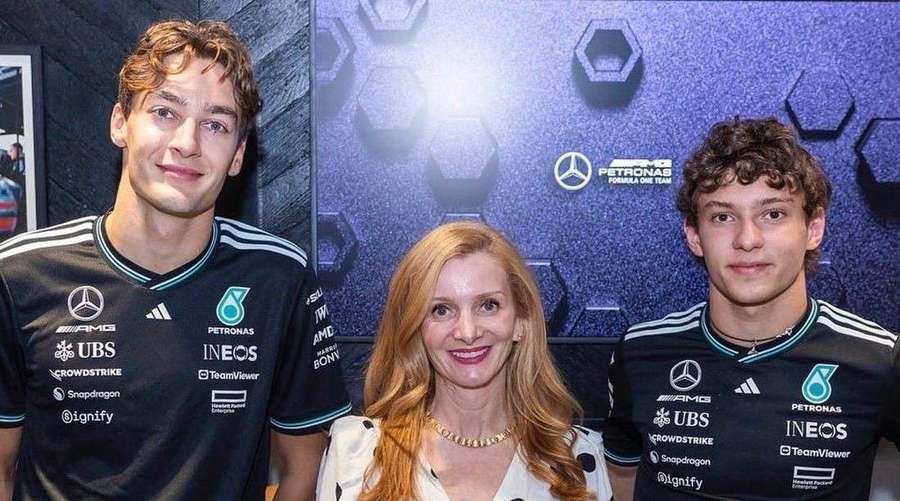 George Russell and Kimi Antonelli with us in Mercedes hospitality. Photo: PaddockPass.
The start was strong: points in his first three races, a feat only two other drivers had managed since 1965, and the youngest race lead in history at Suzuka. Then the European season turned. He took Verstappen out on the first lap in Austria and earned a three-place grid penalty; at Zandvoort he hit Charles Leclerc, took 10 seconds and finished 16th; the paddock openly asked whether he had been promoted too soon and whether a Williams would have been the better seat; and at Monza he crashed in practice, took a track-limits penalty, finished ninth, and Wolff called the weekend "underwhelming" and told him to "just free up." The team did not change the lineup, the message or the public backing, and the year turned again: second in Brazil, which took his total past Hamilton's 18-year-old record for points by a rookie, then third in Las Vegas from 17th on the grid. He finished seventh with 150 points, more than every other 2025 rookie combined.
THE SEASON THAT ENDED THE ARGUMENT
The 2026 Antonelli averaged 18.5 points a race against 6.25 the year before. He took pole in China in March, the youngest Grand Prix pole- sitter in history, won there for his first victory, became the youngest championship leader in history in Japan, and won at Monza from 19th on the grid after a 20-place engine penalty, Italy's first home winner in 60 years. By Austin he had nine wins and a 123-point lead, and he arrived in Mexico needing a top-nine finish, after a week in which a viral illness kept him off Thursday's media day. He left it as champion.
View on Instagram · @mercedesamgf1
The number that explains the title is how rarely the points column stopped. The one zero of 2026 came at Silverstone in July, when the car failed while he was closing on the win and a track-limits penalty dropped him to 16th; his lead fell from 40 points to 25, and the way he and Wolff handled that afternoon told us then what kind of season this would be. The difference between his 2025 and 2026 was never peak speed, which he always had.
LESSONS LEARNED
Mercedes bought the option early and paid for it in patience, not money. Signing a 12-year-old costs little; the cost is the willingness to wait six years and then absorb a public rookie slump without flinching. Most organizations can do the first and not the second.
The decision was made before the evidence was complete, and that was the point. Wolff decided in five minutes because the information he needed had been gathered over six years of junior racing. Fast decisions look reckless only when the preparation is invisible.
The crash did not change the plan, and that counted for more than the crash. Holding the Monza press conference the morning after the wreck told the driver, the team and the paddock that the judgment was not conditional on one Friday. The 2025 summer got the same treatment.
The structure around the talent carried it through the gap. Wolff's own diagnosis of what breaks young drivers is pressure, and his own explanation of why Antonelli did not break is the family and the team around him. That is a management answer, not a driving one.
And Ferrari's choice was defensible on the day it was made. Judging an 11-year-old is hard, and most 11-year-olds do not become this. The team willing to be wrong about a child was the one that got to be right about a champion.