Cadillac F1 Is for Sale at $3B. What Should Its Sponsors Do Now?
Mark Walter wants $3B for a team with zero points. Tommy Hilfiger and Jim Beam sold an American story, Claro followed its Mexican driver, and nobody knows if GM can block a buyer.
Listen to this article 14 min, narrated
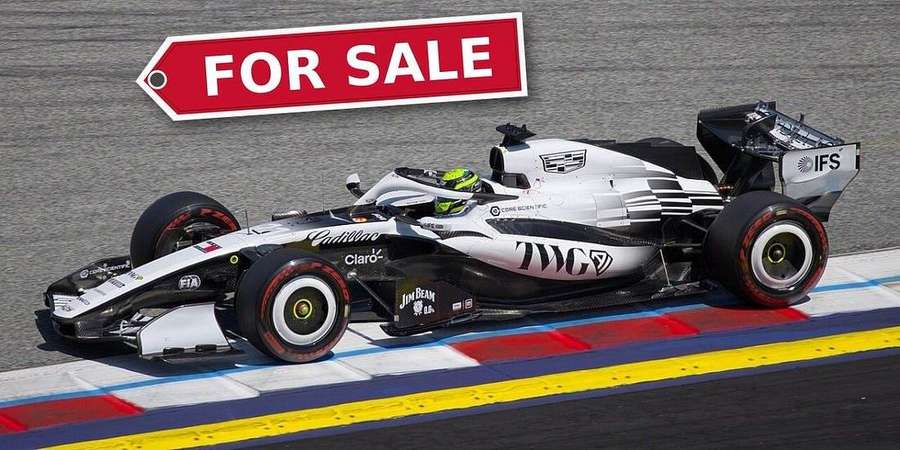
Mark Walter, the billionaire chief executive of the investment firm Guggenheim Partners and controlling owner of the Los Angeles Dodgers, is shopping the Cadillac Formula 1 team at a valuation of at least $3 billion, according to three people familiar with the process, with at least seven parties interested. The team is one season old, has not scored a point and is on track to lose about $400 million this year. Buyers are circling. TWG Global, the holding company through which Walter owns the team and his interests in financial services, insurance, artificial intelligence and sports, has neither agreed a deal nor announced a sale.
For the brands on the car, the sale reopens the deal they signed. Tommy Hilfiger, the New York fashion house, called its deal “a bold new era of American motorsport,” and Jim Beam, the Kentucky bourbon, describes the team and itself as “two American originals.” Claro, a brand of the Mexican telecom group América Móvil, bought in because of the team’s Mexican driver, Sergio Pérez. Nothing public says whether General Motors, the Detroit carmaker that owns the Cadillac brand and holds a minority stake in the team, can block a buyer. Six groups have something at stake: the sponsors, Walter as the seller, the buyers, GM, the team itself and the other 10 teams.
THE SPONSORS ON THE CAR
The team’s partner page lists 11 partners, led by TWG AI, a business inside the seller’s own group. The others are Frontieras North America, a Houston energy-technology company, 3M, Claro, which also carries América Móvil’s Telcel and Infinitum brands, Core Scientific, IFS, Jim Beam, Tenneco, Tommy Hilfiger, Pirelli and Alpinestars. Nobody left during the months of bad news. Every partner on the page in June is still there, and Frontieras signed in October, after the federal inquiry was public. A second brand from the seller’s side rides on the nose without appearing on the page: Gainbridge, the annuity brand of an insurance group ultimately controlled by Walter.
Cadillac’s 2026 livery reveal, set to John F. Kennedy’s 1962 Moon speech. Video: Cadillac Formula 1 Team.
Jim Beam also sponsors the Dodgers, the team Walter is keeping. Tommy Hilfiger came over from Mercedes, proof that it follows F1 across teams and countries. Claro’s money follows the driver: América Móvil tied the deal to Pérez joining, and in 2025, when he was out of F1, it backed Alpine instead. The deals are modest, with Tommy Hilfiger’s estimated at $2.5 million a year and Jim Beam’s at $1.5 million. TWG AI and most likely Gainbridge would leave with the seller, which frees more space on the car than the partner page suggests.
THE DRIVERS’ OWN SPONSORS
Pérez brings more than 20 personal partners. Many are Mexican or Latin American, among them Telcel, Banamex, Farmacias del Ahorro, Mercado Libre and the state of Jalisco. Others are global: KitKat, Nescafé, Mobil, McDonald’s, Tommy Hilfiger and GM’s own Cadillac brand. The amounts are confidential, but his deals average about $1.5 million a year each.
View on Instagram · @schecoperez
His contract runs to at least 2029, but a contract protects his sponsors only while the owner wants him. Red Bull signed him through 2026, then ended that deal two years early. Our view is that a new owner with its own plans for the seats is the real risk to his sponsors, and to Claro.
Valtteri Bottas, the team’s other driver, is less settled. Cadillac has yet to trigger his 2027 option, and GM is reportedly keen to promote Colton Herta, the team’s American test driver. Herta spent most of his IndyCar career in the No. 26 Gainbridge car, the same Walter-controlled insurance brand now on Cadillac’s nose. Another Walter insurer, Delaware Life, is the primary partner of Marcus Ericsson’s No. 28 Andretti IndyCar this season. Most of Bottas’s portfolio is his own businesses, which go wherever he races: Oath Gin, Kahiwa Coffee and the IHANA wine label. The deal tied to this seat is Tecovas, the Austin western-wear brand that named him ambassador for the American races.
WHAT A SPONSOR SHOULD DO NOW
Our view is that the brands on the car should stay, quietly, and protect themselves. As of August, the team itself was not part of the federal investigation; the owner’s troubles are covered below. Tommy Hilfiger and Jim Beam sold their deals to the public as an American story built on the Cadillac name. A buyer that keeps GM keeps that story. One that loses GM, or comes from outside the United States, changes what they signed up to promote. Claro bought Pérez. This week, a sponsor’s lawyers will look for a change-of-control clause, an exit if the team stops racing as Cadillac, and a brand-safety clause that covers the owner. Walking out over allegations against a parent company would be expensive and early, and a stronger owner could make the deal worth more. The better move is a private question to GM.
For a brand thinking about joining, waiting gives away leverage. Much of this year’s loss comes from a commercial side still ramping up, and a seller asking $3 billion wants a fuller sponsor book. Our view is to sign now, on four terms: a one-season first term with options, an exit if control changes or the Cadillac name goes, a fee that reflects zero points, and brand safety that covers the owner. The exception is a brand whose deal only works with GM attached, which should wait for GM’s answer.
THE ASKING PRICE
TWG and GM paid a $450 million fee to the 10 existing teams to join and invested at least another $1 billion. With this year’s loss, the backers carry at least $1.85 billion of cost before a single point. Against estimates of what each team is worth, Walter is asking nearly twice Cadillac’s own.
Cadillac's $3B ask against the grid
Team value estimates, August 2026. The ask prices a place on the grid: F1 has 11 and says there is no room for a 12th.
Cadillac’s reported $3B asking price against August 2026 team value estimates.
The ask makes more sense as the price of a place on the grid. The engines are leased from Ferrari and the drivers are on contracts; what cannot be bought anywhere else is the entry. F1 turned down a bid led by Michael Andretti, the former F1 driver and IndyCar team owner, before admitting Cadillac with GM at its center. Red Bull’s second team, Racing Bulls, turned down an offer above $2 billion, and Stefano Domenicali, Formula 1’s chief executive, says there is no room for a twelfth team. Buyers still have limits: Mercedes walked away from Alpine rather than pay a $3 billion valuation for a 24 percent stake.
View on Instagram · @cadillacf1
WHY WALTER IS SELLING
In August, Walter agreed to sell the Los Angeles Lakers for $12.5 billion. In September, he sold his Chelsea stake. He is reportedly selling the WNBA’s Los Angeles Sparks, while keeping the Dodgers.
Behind the sales, Manhattan prosecutors and the Securities and Exchange Commission are examining two Walter-controlled insurers, Delaware Life and Clear Spring. The question is whether they failed to disclose that private credit investments backed other Walter businesses. In June, Delaware Life restated its filings, and its investments tied to Walter’s businesses rose from $1.4 billion, about 3 percent of its portfolio, to at least $17 billion, at least 39 percent. Both insurers’ websites now link to a plan to reduce their affiliated investments and fix their controls. Delaware Life’s site also shows negative outlooks, set in July 2026, from all three agencies that rate it. A policyholder filed a class action in September. No charges were filed as of August, the claims are allegations, and TWG denied any fraud. In August, it also said twice that it was not considering a sale of the Cadillac team.
DOES GENERAL MOTORS HAVE A VETO?
No public document says either way. TWG is the controlling owner, with the split unknown, and Eric Warren, GM’s head of motorsports competition, calls GM “an equity shareholder in the team” that sees it as “our team.” Formal rights aside, GM holds three kinds of leverage:
- The name. Without GM, a buyer cannot call the team Cadillac.
- The engine. GM’s own power unit arrives in 2029 from a company GM formed with TWG.
- The people. The driver signings rested with GM and Dan Towriss, Cadillac’s chief executive.
GM chose its partner before. In 2023, when F1 asked whether it would drop Andretti, GM’s president, Mark Reuss, refused to move the deal. This year, a planned switch of TWG’s Andretti IndyCar team to GM’s Chevrolet engines did not go ahead, reportedly because of the federal investigation. Our view is that a partner willing to pass on an engine deal for that reason will want a say in who owns its F1 team.
WHO COULD BUY IT
No report links any buyer to Cadillac by name. The pool for F1 teams runs to billionaires, funds, sovereign wealth, corporations and carmakers. GM could in principle buy out its partner, though no report says it intends to. BYD, the Chinese carmaker, held F1 talks with Christian Horner, the former Red Bull team principal, in May. Its adviser later appeared to rule out buying an existing team.
Horner is the most visible would-be owner. His group’s bid for a stake in Alpine went nowhere after Renault rejected any offer involving him. If GM stays, the question is whether an American carmaker would accept him. In 2024, a Red Bull employee accused him of misconduct. He denied it, and two independent investigations dismissed the grievance and the appeal. Ford’s chief executive, Jim Farley, then preparing to supply Red Bull’s engines, still wrote to the team demanding a resolution. Our view is that GM is unlikely to welcome a buyer whose name brings 2024 back into the headlines, whatever the investigations found.
If GM leaves, a buyer gets the entry, the factories and the staff, but not the Cadillac name or the GM engine, which makes $3 billion harder to justify. Horner’s Red Bull payout of about £75 million would cover a small fraction of that, so any bid of his would rest on partners’ money.
THE TEAM INSIDE THE SALE
The people at Cadillac are learning about their owner’s plans from the press. In August, Dan Towriss replaced the founding team principal, Graeme Lowdon, with Marcin Budkowski. “It was my decision. It wasn’t a mutual decision,” Towriss said, adding that Lowdon learned of it that morning. Towriss also runs Group 1001, the TWG subsidiary that owns the two insurers under investigation. Budkowski says “there’s no doubt for me that there’s no influence there.”
View on Instagram
Every other owner on the grid will read a $3 billion sale as a valuation of their own team. If your brand were on that car today, would you stay?
LESSONS LEARNED
A sponsor buys the owner along with the team. The logo goes on the car, but the risk sits with whoever controls the company above it, and the contract should say what happens when that changes.
An F1 entry trades like a license. The price follows the scarcity of the slot and the market behind it, while results barely enter the calculation, at least for now.
A partner without a written veto can still hold one. GM’s name, its engine and its record of walking away from Walter’s IndyCar team give it a say in this sale.
A public denial lasts as long as the owner’s need for cash allows. TWG’s August statements were accurate when made, and three sales later the market treats them as a holding line.