Your Kid Wants to Be in F1? Part 1There Are 22 Seats, Two or Three Open a Year, and the Losers Earn $350K
F1 is the only sport where the backup career pays a banker's salary and still counts as failure. The odds, the ages and the pay, for anyone wondering why rich kids fill the grid.
Listen to this article 7 min, narrated
Somewhere in a WEC paddock this weekend there is a driver who was once the next big thing, who climbed to Formula 2 and never got the call. He now shares a factory GT car with two teammates, and in the only pay survey on record, factory GT drivers earn $350K to $400K a year. In his sport that counts as not making it to the top. This is the first of seven parts for parents whose child wants to reach Formula 1, and it starts with the two numbers that decide everything else: how many get in, and what the ones who get in earn. By the end of this part you will know what the backup careers pay, and the answer is better than the sport lets on.
ONE OR TWO A YEAR
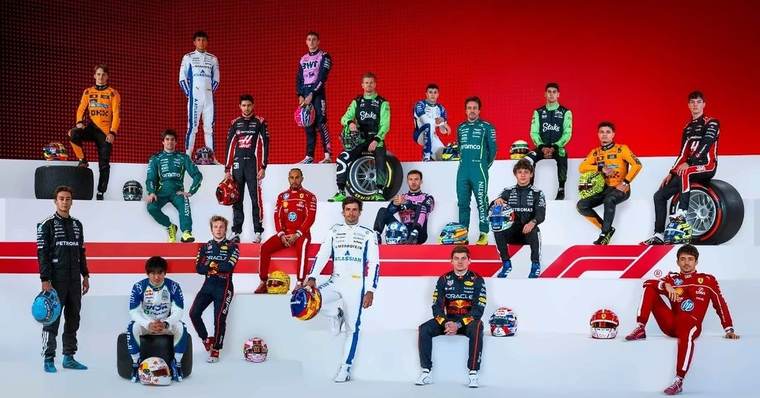
Formula 1 has 22 seats and almost no turnover. In a typical year, two or three rookies start the season in a full-time seat. Over the ten seasons from 2017 to 2026, 24 did; 4 of those years had 1 or 2, 2024 had none, and the busiest year, 2025, had 6. Another 12 drivers made one-off or stand-in starts in a year when they had no seat of their own, and 8 of them earned a full-time seat later. Karting journalist Alan Dove calls it the pathetic math of the pathway: thousands of drivers chase a few dozen seats a decade, so the price of anything labeled "the first step to F1" inflates to match.
Of the 122 drivers who raced in Formula 2 in its first decade, 22 reached Formula 1. Juan Pablo Montoya, whose son Sebastián races there, calls F2 a "war of wallets" and puts a 2027 seat with Invicta Racing, one of its top teams, at more than $4.6M. The 100 who do not graduate have just spent the most expensive seasons of their lives. Nobody reaches F1 at 18, either, whatever the stories say: the 22 drivers who started the 2026 season made their debuts at an average age of 20.7, 14 of them between 19 and 22, with Kimi Antonelli at 18 and a half and Nico Hülkenberg at 25 at the edges.
Full-time F1 rookie seats, 2017 to 2026
Drivers who started the season in a full-time seat for the first time
| Year | Seats | Who |
|---|---|---|
| 2017 | 1 | Stroll |
| 2018 | 4 | Leclerc, Sirotkin, Gasly, Hartley |
| 2019 | 4 | Norris, Russell, Albon, Giovinazzi |
| 2020 | 1 | Latifi |
| 2021 | 3 | Tsunoda, Schumacher, Mazepin |
| 2022 | 1 | Zhou |
| 2023 | 3 | Piastri, Sargeant, de Vries |
| 2024 | 0 | |
| 2025 | 6 | Antonelli, Bortoleto, Hadjar, Doohan, Bearman, Lawson |
| 2026 | 1 | Lindblad |
| Total: 24 seats in 10 years, 2.4 a year | ||
A driver counts in the year of his first full-time seat, even if he made stand-in starts earlier.
Stand-in and one-off starts by drivers without a full-time seat that year: Giovinazzi, Gasly and Hartley (2017), Aitken and Fittipaldi (2020), de Vries (2022), Lawson (2023), Bearman, Colapinto and Doohan (2024), Hirakawa and Câmara (2026). Eight of the twelve later earned a full-time seat.
Full-time F1 rookie seats by year, 2017 to 2026, with stand-in debuts in a footnote.
WHAT THE TOP PAYS
A rookie F1 seat pays $500K to $2M a year; the midfield $5M to $8M; the top $20M to $60M, and Max Verstappen's new Red Bull contract is reported at about $100M a year from 2027. Teams publish none of this. Bonuses and sponsors sit on top: Antonelli's $2M base is expected to reach about $11M with his title bonus. 6 drivers on the grid earn under $2M; 4 earn $30M or more. Part 3 shows what those salaries would have to repay.
WHAT THE OTHER CAREERS PAY
Everywhere below F1 pays a professional's wage, and Marshall Pruett put numbers on it from the people who sign the contracts: IMSA GT drivers $80K to $225K a season, factory GT drivers $350K to $400K, prototype drivers $300K to $500K, IndyCar rookies $250K to $300K, and about eight IndyCar drivers above $2M. Those are 2022 figures for the American series, and they are the only pay bands on record; the WEC and Super Formula teams, where most Formula 2 leavers end up, publish nothing. His first quote was from a driver manager: "If you want to be a race car driver, don't do it for money."
Zak O'Sullivan was a Williams junior who left F2 in 2024 with three rounds to go because the money ran out. He went to Japan, raced two seasons of Super Formula, and has a Formula E seat for 2026 to 2027. Nikita Johnson, an American who tried FIA F3 in Europe in 2025 without scoring a point, came home, and in September St. Petersburg, Florida held a ceremony at City Hall for its 18-year-old Indy NXT champion, the youngest in the series' history. Neither will race in F1. Both are paid to drive, and one of them was honored at City Hall. Would you call that a failure?
LESSONS LEARNED
- Start with the odds. Two or three full-time rookie seats a year, and 22 of 122 F2 drivers reached F1.
- Treat the money as spent. Six F1 drivers earn under $2M and a factory GT seat pays $350K to $400K; nothing below F1's top tier repays the climb.
- Plan for arrival at 20. That is 12 to 14 racing seasons.
- Decide now whether a paid seat elsewhere counts as success. O'Sullivan and Johnson decided yes.
Next in this series: Part 2, karting to junior formulas, the first steps on the ladder.