F1 Nepo Babies, $12M Entry Fee, Sold Houses, Billionaires and a Team Boss’s $1M
Only 1 driver on the 2026 grid has a father who raced in F1. The other 21 found another way in, and 3 families sold their homes to do it.
Listen to this article 20 min, narrated
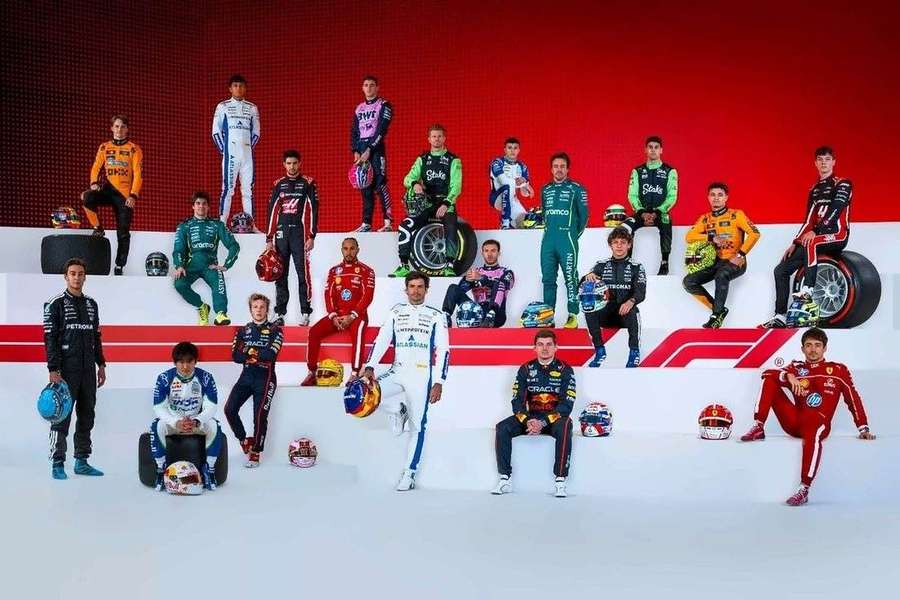
Lando Norris’s father is reported to be worth about $270M. Esteban Ocon’s parents sold their house and garage and lived in a caravan. Both sons reached Formula 1, and so did 20 more drivers who started the 2026 season, on a junior ladder that can cost $12M before a driver turns a lap in F1. Only one of them, Max Verstappen, has a father who raced in F1. The rest needed the money from somewhere: a family that sold a house or a business, a billionaire patron, a team boss’s own pocket, or a team academy, which 19 of the 22 joined.
THE 2026 GRID IN ONE TABLE
Every driver who started the 2026 season is sorted below by family wealth, racing connection and academy backing, with the rows colored by team. Ocon stays in the table, and Rafael Câmara, who joined Haas late in the 2026 season, appears below the line.
Who makes the F1 grid
The 2026 drivers by family wealth, racing connection and academy backing
| # | Driver | Team | Family wealth | Racing connection | Academy or backing |
|---|---|---|---|---|---|
| 1 | George Russell | Mercedes | Well off | None | Mercedes junior, 2017 |
| 2 | Kimi Antonelli | Mercedes | – | Father races sportscars, owns a team | Mercedes junior, before 13 |
| 3 | Charles Leclerc | Ferrari | Backer-funded | Godfather Jules Bianchi (F1); father raced F3 | Ferrari academy |
| 4 | Lewis Hamilton | Ferrari | Modest | Half-brother raced touring cars | McLaren, 1998 |
| 5 | Lando Norris | McLaren | Very wealthy | None | McLaren junior |
| 6 | Oscar Piastri | McLaren | Well off | None | Alpine academy, 2020 |
| 7 | Max Verstappen | Red Bull | – | Father Jos raced in F1 | Red Bull junior |
| 8 | Isack Hadjar | Red Bull | Modest | None | Red Bull junior, 2022 |
| 9 | Alex Albon | Williams | – | Father raced in the BTCC | Red Bull junior |
| 10 | Carlos Sainz | Williams | – | Father is a 2-time rally champion | Red Bull junior, 2010 |
| 11 | Fernando Alonso | Aston Martin | Modest | None | Managed by Flavio Briatore |
| 12 | Lance Stroll | Aston Martin | Very wealthy | None | Ferrari academy, 2010 |
| 13 | Pierre Gasly | Alpine | Backer-funded | Father raced karts and rallies | Red Bull junior, 2014 |
| 14 | Franco Colapinto | Alpine | Modest | Father raced cars and motorcycles | Williams academy, 2023 |
| 15 | Esteban Ocon | Haas | Modest | None | Mercedes junior, 2015 |
| 16 | Oliver Bearman | Haas | Very wealthy | Father and grandfather club racers | Ferrari academy, 2022 |
| 17 | Nico Hülkenberg | Audi | Well off | None | Managed by Willi Weber |
| 18 | Gabriel Bortoleto | Audi | Well off | Brother raced British F3 | McLaren program, 2023 |
| 19 | Liam Lawson | Racing Bulls | Modest | None | Red Bull junior, 2019 |
| 20 | Arvid Lindblad | Racing Bulls | – | None | Red Bull junior at 13 |
| 21 | Sergio Pérez | Cadillac | Backer-funded | Father and brother raced | Slim family's Escudería Telmex |
| 22 | Valtteri Bottas | Cadillac | Modest | None | Guided by Mika Häkkinen |
| Joined during the season | |||||
| 23 | Rafael Câmara | Haas | – | Grandmother raced at Interlagos | Ferrari academy, 2021 |
The 2026 F1 grid by family wealth, racing connection and academy backing.
THE PRICE OF A CHILDHOOD DREAM
The route to F1 runs through karting, Formula 4, Formula Regional, FIA Formula 3 and Formula 2, and the bill grows at every step. A full season of mainstream karting costs about $175K for an 8-year-old and about $295K to $350K for a 13-year-old. Those are the figures for the international and top national series, where scouts watch. Club racing costs a fraction of that: Williams reserve driver Luke Browning raced in Britain’s Independent Kart Racing and Northern Karting Federation series, then won a free test through a sim-racing competition that paid for his first season in cars. On the current grid, Nico Hülkenberg, Liam Lawson and Sergio Pérez all reached F1 with national karting only, in Germany, New Zealand and Mexico. Formula 4 costs about $700K a season, Formula Regional about $1.3M, Formula 3 about $1.7M to $2.1M and Formula 2 about $2.7M to $3.1M. At the front of the grid, the price runs higher: Juan Pablo Montoya, whose son Sebastián races in F2, said a 2027 seat with Invicta Racing costs more than $4.6M. Travel for an F3 or F2 season, with races on three continents, runs to $460K or more a year at the top end. Very few families can pay that, and most start looking for help long before F2. “If I started karting today, I don’t think I’d be able to get there,” said George Russell, whose family once paid for his own climb.
The bill also leaves out the adult who travels with a young driver, whether a parent, a relative or a guardian, and the work that person gives up to be on the road. Because his father was away rallying, Carlos Sainz’s uncle took him to his kart races, and only after retiring did his father travel the world with him. At 11, Gabriel Bortoleto moved to Italy to live with his driving coach, Francesco di Mauro, while his parents stayed in Brazil for financial reasons. Franco Colapinto moved to Italy on his own at 14. Both are among the 7 drivers on the grid who race under flags from outside Europe. The road to F1 runs through Europe, so leaving home young is part of the price.
View on Instagram · @experiences.xo
The parents who did travel split their working weeks. Adam Norris described looking after Lando as a five-days-a-week job, with one day at work and one at home. Oscar Piastri moved to Britain at 15 with his father, who stayed 6 months and then told his son he had to go back to his own work to keep paying for the dream. Oscar went to boarding school and raced on weekends, with his mother and sisters on the other side of the world. Oliver Bearman’s family raced 40 to 45 karting weekends a year, and his father stopped racing himself: “Every penny I had went into karting.” “The whole family really does commit to this dream that you have,” said former racing driver Naomi Schiff, now a Sky Sports F1 presenter.
ONE F1 FATHER, AND EVEN HE RAN OUT OF MONEY
Verstappen looks like the textbook nepo baby, since his father Jos raced in F1 from 1994 to 2003. Yet Jos was more or less out of money by the time Max moved to cars, said Frits van Amersfoort, who ran Max’s first F3 team. Former F1 driver Huub Rothengatter paid for the car and the first part of that 2014 season. Max went on to become a 4-time F1 champion.
View on Instagram · @experiences.xo
Charles Leclerc had an F1 link of his own in his godfather, F1 driver Jules Bianchi, plus a father, Hervé, who raced in Formula 3, and a brother, Arthur, who races too. None of it paid the bills. The family’s money was gone by the time Charles was 13. Bianchi introduced them to his own manager, Nicolas Todt, son of former Ferrari boss Jean Todt. “He should have stopped karting because he ran out of money,” Todt said, and he funded Leclerc’s career from then on. Leclerc became a Ferrari driver in 2019.
View on Instagram · @experiences.xo
9 more drivers have a parent or sibling who raced cars outside F1. Sainz’s father is a 2-time World Rally champion. Kimi Antonelli’s father Marco raced GT cars and owns the AKM Motorsport team, and Kimi became the youngest champion in F1 history in Mexico City on November 1, 2026. Alex Albon’s father Nigel raced in the British Touring Car Championship. Pierre Gasly’s father raced karts, endurance cars and rallies. Sergio Pérez’s father raced cars, and his brother Antonio raced in NASCAR Mexico. Bearman’s father and grandfather raced at club level, and his brother Thomas races in Italian F4. Bortoleto’s older brother Enzo raced in British F3 and the Porsche Cup. Lewis Hamilton’s half-brother Nicolas raced in the British Touring Car Championship from 2015. Franco Colapinto’s father Aníbal raced motorcycles on speedway tracks and cars in Argentina’s Turismo Nacional.
View on Instagram · @experiences.xo
The next generation of F1 surnames is in F2, and the name alone is not carrying them. Sebastián Montoya is the son of 7-time F1 race winner Juan Pablo Montoya, and Emerson Fittipaldi Jr. is the son of 2-time F1 champion Emerson Fittipaldi. In 2026, neither ran near the front of the F2 standings. Juan Pablo Montoya said the family threw its money away on Sebastián’s disastrous 2026 season, and they are preparing for another F2 year in 2027.
THE BILLIONAIRE AND THE CARAVAN
At the top of the money scale, the story is simple. Lance Stroll’s father Lawrence, reported to be worth about $3.7B, funded his son all the way to F1 and then bought him a team to race in. Norris rose through the junior ranks on his father’s fortune and won the 2025 world championship. Bearman’s father David founded the insurance group Aventum, which made about $26M in pre-tax profit in the year to June 2023.
Even that fortune had a limit. David Bearman could not have funded both his sons if Oliver had stayed in F2, and Oliver recalled his father saying the family could not afford several F4 seasons. Ferrari’s academy took Oliver at 16.
View on Instagram · @experiences.xo
One step down, the families were comfortable and still sacrificed a great deal. Piastri’s father Chris founded the automotive software company HP Tuners, which sponsored his son from karting to F1. Nico Hülkenberg’s father owns a shipping company. Bortoleto’s father Lincoln Oliveira founded the internet provider Americanet, but the family lived in a middle-class home in Osasco, Brazil when Gabriel started, and they could not pay for two careers. His brother Enzo stepped away from his own. A decade later, the brothers built a fan-experience business together around Gabriel’s F1 career. George Russell’s father sold his seed and pulse business and invested about $1.3M over 12 years, which Russell described as everything the family had. At 16, with his father’s money running out, Russell emailed Toto Wolff, then walked into Mercedes’ factory in a suit and tie with a PowerPoint presentation on why the team should back him. Mercedes paid for his next season and signed him. When the F1 money came in, Russell repaid his dad about $2M.
View on Instagram · @experiences.xo
At the bottom of the scale, families sold their homes. Ocon’s father worked as his mechanic, and the family traveled from race to race in their caravan. Liam Lawson’s parents sold their house and still do not own another, and his sisters gave up international dance competitions because his karting cost too much. Colapinto’s father sold his house to pay for a single F4 season in 2019, with no guarantee of anything after it. Isack Hadjar’s parents came to France alone at 19 and built everything themselves. His father, a physicist, did all his mechanics, and the family could never afford a full karting calendar or the best engine.
View on Instagram · @experiences.xo
Some of the most modest starts produced the biggest careers. Hamilton’s father Anthony left his job as an IT manager to work as a contractor, often holding several jobs while managing his son’s karting. Fernando Alonso’s father was an explosives engineer for a mining company, and his mother worked in a department store. Between them, the two sons won nine world championships. Valtteri Bottas’s father ran a small cleaning company, and father and son found small sponsors and traveled to races in the old cleaning van. Bottas went on to win 10 races for Mercedes.
WIN OR STOP: THE BACKERS
Leclerc was not the only driver whose career a backer rescued. For Gasly and Pérez, the money came from outside the family, and the deal sometimes came with a deadline. Gasly called 2013 a season to “win or stop,” and a backer in Switzerland paid for it. He won the title, and Red Bull signed him. The family of Mexican billionaire Carlos Slim backed Pérez from age 14 through Escudería Telmex, its driver program, yet his family still slept in a rented car at his first US race because they could not afford a hotel. In Germany, Juan Ignacio Casanueva, founder of the Mexican insurance group INTERprotección, promised him $5K and a sponsorship if he won his next race. He won.
The boy from the caravan needed one more rescue. Ocon’s first F1 seat, at Manor in 2016, cost $2M, and Mercedes could cover only $1M, so Fred Vasseur, now Ferrari’s team principal, paid the other $1M himself. That seat started a ten-year F1 career. In 2026, Haas dropped him for the season’s last four races.
Albon’s career nearly ended in a single year. In 2012, his mother Kankamol was jailed for six years over a $10M luxury-car fraud, and at the end of that season Red Bull dropped him from its junior program. He later called it “by far the hardest year I’ve had in my life”. With his father, he went looking for sponsors in Thailand, and early in 2018, with no money and no seat, he gave himself “only a 10 percent chance” of racing. He talked DAMS into a race-by-race deal, finished third in F2, and Red Bull called him back for an F1 seat at Toro Rosso in 2019. He joined Williams in 2022.
Companies from a driver’s home country back many of the others. The Brazilian insurer Porto and the bank Banco de Brasília both sponsored Bortoleto from 2023, when he raced in F3. The Argentine technology company Globant backed Colapinto, and the energy company YPF supported him on his way into Williams’ academy. The Giltrap Group, Turners and Porter Group backed Lawson from 2017, and in 2021 David Dicker, founder of the carmaker Rodin, kept him on the F2 grid. “Without David we would never have been able to complete the journey,” Lawson said. Finnish billionaire Antti Aarnio-Wihuri backed Bottas from his karting days, after Bottas’s father’s company cleaned his factory.
THE ACADEMY GATE
A name gets a driver noticed, and an academy decides who gets paid for. Academies produced most of today’s grid, and all 7 drivers who graduated from the junior series to F1 in the three seasons before 2026 were academy members with significant backing. Nineteen of the 22 drivers on this grid joined one, from Hamilton at McLaren in 1998 to Antonelli at Mercedes before he turned 13. The other three came through managers and test-driver roles: Alonso through kart importer Genís Marcó, former F1 driver Adrián Campos and later Flavio Briatore, and Hülkenberg and Bottas as Williams test drivers, managed by Michael Schumacher’s longtime manager Willi Weber and by a group Bottas formed in 2008 with Toto Wolff and two-time champion Mika Häkkinen.
An academy seat is not a blank check, since most F1 academies do not pay the full fees. Zak O’Sullivan, a former Williams academy driver, left the 2024 F2 season midway because of funding problems. “I’m from a wealthy family, but not to the extent to spend millions,” he said. Hadjar came close to the same wall. He said that F3 and F2 costs were out of reach for his family, that his mother found sponsors for part of a season and Red Bull covered the rest, and that 2025 was the first year he earned a living from racing. In 2026, the physicist’s son became Verstappen’s teammate at Red Bull.
THE DRIVERS HOLDING THE DOOR OPEN
Some of the drivers who made it are now paying for the next ones. Hamilton pledged about $27M of his own money in 2021 to found Mission 44, a foundation for young people from underrepresented backgrounds, and its Ignite partnership with Mercedes builds routes into motorsport careers. Alonso opened a karting circuit, museum and karting school near his hometown in Asturias, Spain, in 2011, and in 2022 he launched A14 Management to guide young drivers from karting up the ladder; Bortoleto is its best-known client. Norris personally funds the LN4 Legacy Programme, a fully funded scheme for young drivers who could not otherwise pay, and it started with a single driver.
The newest champion has the same plan. Antonelli, who grew up in the garage of his father’s team, said in October 2026 that he wants to build an academy to give young drivers a chance, with the family’s AKM Motorsport team as a stepping stone. Outside the cockpit, former Ferrari engineer Rob Smedley’s FAT Karting League let 7,000 children race for one fully funded British F4 seat, and in 2026 it went to 16-year-old Jackson Wolny. Each of these programs reaches a handful of drivers at a time, against a ladder that costs millions a year.
THE NEWEST NAME ON THE GRID
The driver who replaced Ocon fits every pattern in this piece. Rafael Câmara took Ocon’s seat at Haas at the 2026 São Paulo Grand Prix, with a full-time contract for 2027 already signed. His father is a lawyer and his mother a businesswoman, the family moved twice for his racing, and Ferrari’s academy chose him in 2021. He arrived in F1 while leading the F2 championship. His grandmother, Niege Rossiter, raced at Interlagos in 1965, 61 years before her grandson’s first F1 weekend on the same track.
LESSONS LEARNED
- Racing knowledge runs in families more often than F1 surnames do. Eleven drivers had a parent or sibling who raced cars, and only Verstappen’s father raced in F1.
- Wealth splits the grid, and it does not decide the champions. Seven of the 22 grew up in very wealthy or well-off homes and 7 in modest ones, and Hamilton and Alonso, from two of the most modest, won nine titles between them.
- The academy is the common gate. Nineteen of the 22 drivers joined one, and all 7 recent F2 graduates to F1 were members.
- Families give up homes, careers and time. Three drivers’ families sold their homes, Russell’s father sold his business, and parents, an uncle and a coach left their own lives to travel with a child.
- When family money runs out, a backer decides who continues. Verstappen’s, Leclerc’s and Gasly’s careers each reached a point where an outsider paid for the next season.